Decision Points (book review)

Decision PointsOne of my life goals is to read an (auto)biography of every U.S. President. I’m well on my way. My latest one is Decision Points by President George W. Bush.

This book is laid out in a rather intriguing way. Instead of being told chronologically, it’s told through the prism of the major decisions President Bush faced. Written in this style, we are able to stick with one situation from inception, to decision, to the management of that decision. Now that we are 10+ years down the road from some of these decisions, we get to see the wisdom or folly of those decisions.

The book is a great inside look into the weighty decisions that land on a president’s desk throughout his term in office. As a Christian who has a biblical command to pray for my elected officials, it’s a helpful guide for my daily prayers.

I throughly enjoyed reading Decisions Points, and I think other students of history will appreciate the thoughtful way this book is presented too.

Reflections On Washington

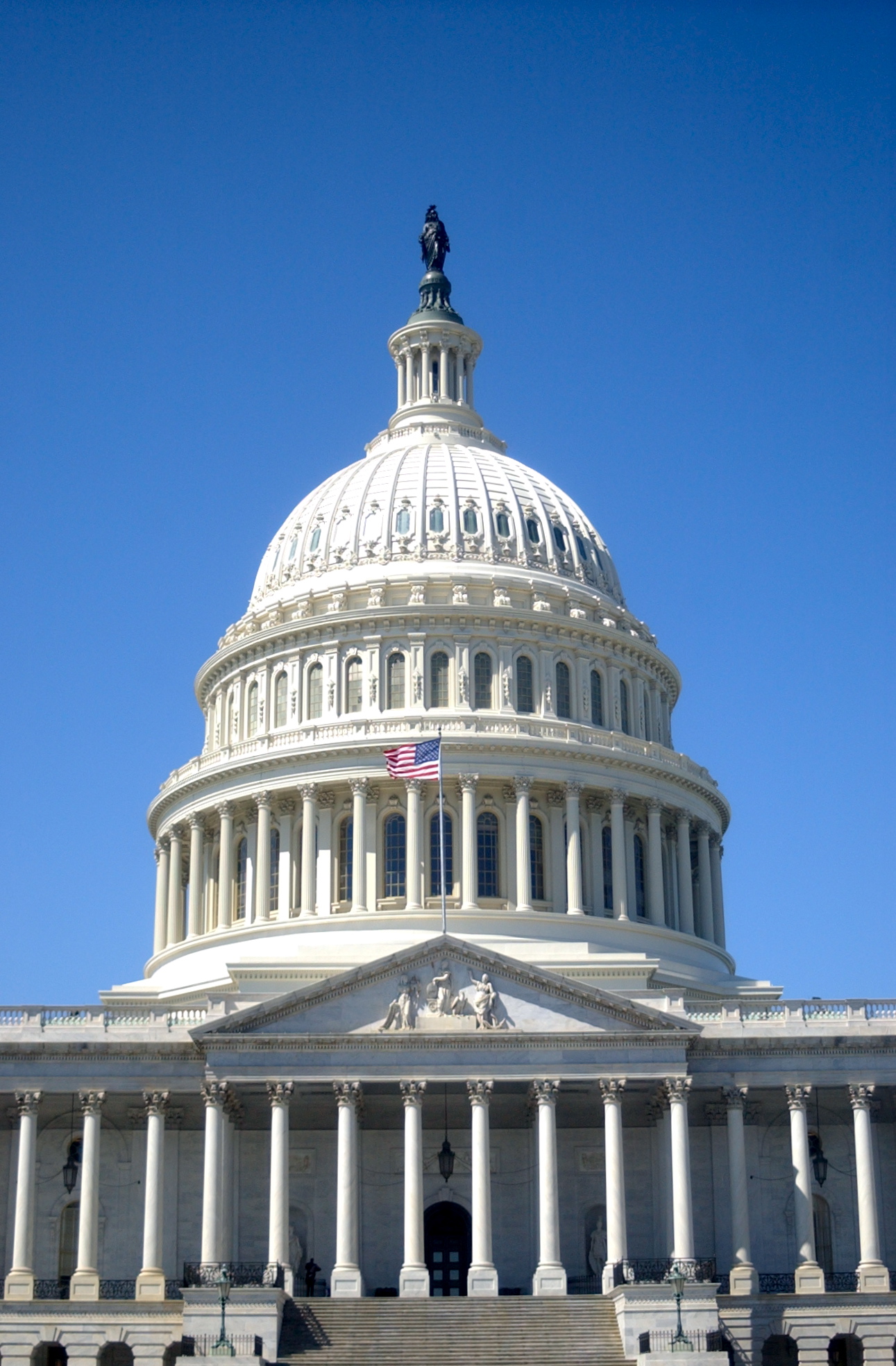
US Capital BuildingMy oldest son is graduating from high school this year, and my wife and I wanted to take him on a special trip for spring break. So we spent the week touring Washington, D.C.

I have never visited our nation’s capital before, and after being there, I’m sorry that I didn’t make that trip earlier! I am bit of a history buff, so seeing all of the historical landmarks and learning more about the people who contributed to the success of America was amazing!

Here are a few reflections I have from my time…

I need to be more grateful. So many people have sacrifice so much for me to enjoy the freedom I could easily take for granted, if I’m not careful.

I need to study more. Our history is so rich! For me it’s fun to learn about the men and women of our past, but it’s more important than that. If we don’t learn the lessons of the past, we are doomed to repeat the same mistakes of the past.

I need to pray more. Our elected officials face an enormous challenge each and every day. Scripture is clear that prayer for those in our government commanded of us, but the Bible also says that praying for them is beneficial for us.

I need to learn more about Cedar Springs history. The great men and women of American history weren’t all born in Washington, D.C., nor did they all live or work there. I live in a community of hard-working, innovative, passionate individuals. The next Lincoln, or Jefferson, or Jay, or Webster might be right here in my community, and I want to be prepared to support them.

I need to visit Washington again soon. For three solid days we took in everything we possibly could, and we hardly scratched the surface. I can’t wait to go back to learn more!

The Reagan Diaries (book review)

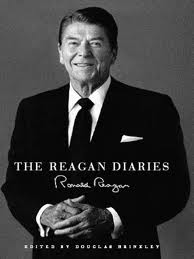
The Reagan DiariesPresident Ronald Reagan was the first president I was old enough to vote for, so he’s always held a special place in my own personal history. After reading several books about President Reagan, I wanted to read something in his own words. I’m so glad I did! The Reagan Diaries is a forthright look at an amazing man.

If you have studied American history during the Reagan presidency—or maybe you lived through that era of our history—you will gain a greater appreciation for the tough decisions that were made during this time. Reagan came into office on a platform that brought a sense of encouragement to an American people who were feeling a bit beat up, and then he tirelessly worked to follow through on the promises he had made, despite a Congress that was initially very antagonistic toward his policies.

Several things really stood out in these diaries. First is Reagan’s reliance on God. Time and again he writes about the wisdom he found in the Scriptures, or the strength he received in prayer. His faith is inseparable from his success in the White House. His faith was one that came to the forefront especially in dark times. Laying in the emergency room after being shot by a would-be assassin, he wrote:

“I focused on that tiled ceiling and prayer. But I realized I couldn’t ask for God’s help while at the same time I felt hatred for the mixed up young man who had shot me. Isn’t that the meaning of the lost sheep? We are all God’s children & therefore equally beloved by Him. I began to pray for his soul and that he would find his way back to the fold. …Whatever happens now I owe my life to God and will try to serve Him in every way I can.”

Another thing that appears in page after page is his love for Nancy. He writes frequently about how lonely the White House seemed when she was gone, he counted down the days until they would be reunited, and he looked forward to the all-too-short times when they could vacation together or take a break on the weekend just to be alone. On the first wedding anniversary they celebrated in the White House, he wrote, “more happiness than any man could rightly deserve.” And back at George Washington Hospital after the assassination attempt he said,

“I opened my eyes to find Nancy there. I pray I’ll never face a day when she isn’t there. Of all the ways God has blessed me giving her to me is the greatest and beyond anything I can ever hope to deserve.”

Finally, I love Reagan’s “realness.” He never took himself too seriously. He remained accessible to as many people in the White House as he could, and spent a lot of time calling and mailing United States’ citizens he read about in the newspapers or saw on the news reports. He was also brutally honest about his own shortcomings. After one press conference he wrote, “I wasn’t very scintillating.”

This is an excellent book to read for both a study in leadership, and as a companion to other U.S. history books of that period. At 700+ pages, it’s a hefty read, but well worth your time.

I Never Thought I’d See The Day (book review)

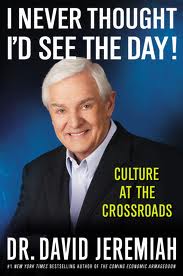
I Never Thought I'd See The DayThe subtitle of Dr. David Jeremiah’s book is the most telling—I Never Thought I’d See The Day: Culture At The Crossroads. It is true that our American culture is at a crossroads, and decisions will have to be made now that could very well effect the direction of the church, and of this nation.

As a side note, I have a bit of an issue with the title of the book. To think we’d never see the day where our culture was sliding away from God’s standard is a bit of hyperbole. Any student of history knows that cultures have always gone through such things many, many times. What is true with American culture now has been true with other cultures, in other eras, on other continents. However, this by no means that Dr. Jeremiah has misdiagnosed where America is now.

Before a cure can be realized, a patient must first know he is sick. Then he must go to a doctor and be willing to follow the prescribed course of treatment. In many ways, Americans know something’s “not quite right” with our society, but have been unable to pinpoint the root cause. Dr. Jeremiah correctly diagnoses an American culture that has become increasingly humanistic, antagonistic toward Jesus, pluralistic, and obstinate toward the teachings of the Bible. In each chapter, Dr. Jeremiah diagnoses one symptom of our disease, and lays out a God-honoring cure.

Here’s the million dollar question: Will we follow the course of treatment?

In the last chapter, Dr. Jeremiah says,

I am pessimistic about man’s ability, independent from his Creator-God, to solve the problems he creates—especially problems of enormous scale such as those our nation and the world face today. I am, however, an optimist about God. And it is toward Him that we must turn our attention….

I Never Though I’d See The Day is a sobering read. Each chapter shows us just how far from God we’ve slid (that’s the pessimistic part), but then Dr. Jeremiah lays out a plan to bring us back to a God-fearing society (that’s the optimistic part). It’s a very interesting read which I especially think church leaders and God-fearing civic leaders must read.

I am a Faith Words book reviewer.

Check out some quotes from this book here.

Happy Birthday, Mr. Lincoln

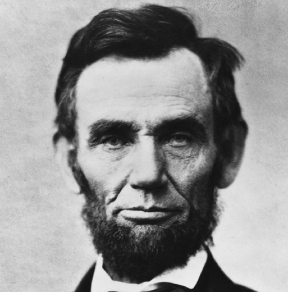
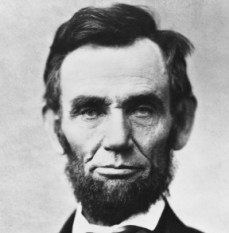
Abraham LincolnToday is Abraham Lincoln’s birthday. What an amazing man he was! Long before he became president of the United States, he had prepared himself to be a first-rate man at whatever he was going to do. How blessed we as a nation are to have a man worthy to be called “the savior of the Union” come into office at the time he did!

In honor of President Abraham Lincoln’s birthday, here are a few quotes and anecdotes from my files.

When he was a boy in Indiana, Lincoln borrowed a book about George Washington from a neighbor, Josiah Crawford. After rainwater ruined it, he went straight to Crawford, owned up to what had happened, and spent three days in Crawford’s cornfield working to pay for the book.

“I’ll prepare myself and be ready for opportunities as they come.” —Abraham Lincoln

When Lincoln was a young storekeeper in New Salem, Illinois, he accidentally shortchanged a customer by six and a quarter cents. As soon as he discovered the error, he closed the shop and walked six miles to pay the money back. Lincoln’s store was not a success. He and his partner, William Berry, went into debt trying to make a go of it. The store “winked out” anyway, as Lincoln put it, and left him owing a great deal of money, especially after Berry died. He could have done what so many others in similar situations did—simply head west for new frontiers and leave the debt behind. But he resolved to stay. For a young man of his means, it was a large burden. He called it, with grim humor, his “national debt.” It took him several years, but he paid it all back. 

“I have been driven many times upon my knees by the overwhelming conviction that I had nowhere else to go. My own wisdom and that of all about me seemed insufficient for that day.” —Abraham Lincoln

“That the Almighty does make use of human agencies and directly intervenes in human affairs is one of the plainest statements in the Bible. I have had so many evidences of His direction, so many instances when I have been controlled by some other power than my own will, that I cannot doubt that this power comes from above.” —Abraham Lincoln 

“The possibility that we may fail in the struggle ought not to deter us from the support of a cause we believe to be just.” —Abraham Lincoln

Horace Greeley, writing in the New York Tribune, wrote: “Never before did one so constantly and visibly grow under the disciplines of incessant cares, anxieties, and trials. The Lincoln of 1862 was plainly a larger, broader, and better man than he had been in ’61, while ’63 and ’64 worked his continued and unabated growth in mental and moral stature.” 

“It is more pleasing to God to see His people study Him and His will directly than to spend the first and chief of their efforts attaining comfort for themselves.” —Abraham Lincoln

“I destroy my enemies when I make them my friends.” —Abraham Lincoln 

“Surely God would not have created such a being as man to exist only for a day! No, no, man was made for immortality.” —Abraham Lincoln

Abraham Lincoln once turned down a job applicant citing, “I don’t like his face.” One of his Cabinet members let the President know that he didn’t think this was an adequate reason for turning down an applicant. To which Lincoln replied, “Every man over forty is responsible for his face.” 

“If often requires more courage to dare to do right than to fear to do wrong.” —Abraham Lincoln

“I remember my mother’s prayers and they have always followed me. They have clung to me all my life.” —Abraham Lincoln

“Die when I may, I would like it to be said of me, that I always pulled up a weed and planted a flower where I thought a flower would grow.” —Abraham Lincoln

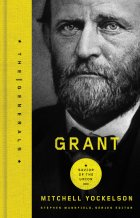
9 Quotes from “Grant: Savior Of The Union”

Grant: Savior Of The Union was a very eye-opening biography to read (you can read my full review by clicking here). Here are nine passages that especially caught my attention:

“This I don’t want you to read to others for I very much dislike speaking of myself.” —Grant, in a letter to his father about the accomplishments of his soldiers 

“The first day out the regiment made it five miles. However, the next morning at six o’clock when Grant resumed the March, his men were unprepared to move. He allowed them time to rise and eat breakfast this time, but the following morning when the men were again not ready to march, Grant left without them. It must have been a sight to see half-dressed soldiers running after their commander. The remainder of the trip to Quincy was conducted in relatively good order. Grant boasted to his father that ‘my men behaved admirably and the lesson has been a good one for them. They can now go into camp and after a day’s March and with as much promptness as veteran troops; they can strike their tents and be on the march with equal celerity.”  —Mitchell Yockelson

At one battle some officers advised retreat. Grant replied, “Retreat? No. I propose to attack at daylight and whip them.”

When some in Washington, D.C., wanted to replace Grant with someone more experienced, President Abraham Lincoln said, “I can’t spare this man; he fights.”

A friend observed that at a banquet where toasts and speeches were made to honor Grant, “his face never changed its unmoved expression. It never lit up with excitement. …His silence was a native endowment, nothing studied, nothing acquired. … His greatest enjoyment was manifestly with [his wife and children]. Their presence and happiness made his face beam as nothing else would.” 

When Grant was given the rank of Lt. General—a rank no one had held since George Washington—Grant’s acceptance speech was very gracious:

“I accept the commission with gratitude for the high honor conferred. With the aid of the noble armies that have fought on so many fields for our common country, it will be my earnest endeavor not to disappoint your expectations. I feel the full weight of the responsibilities now devolving on me and know that if they are net it will be due to those armies. And above all to the favor of that Providence which leads both Nations and men.”

After Robert E. Lee signed the surrender agreement for the armies of the South, word spread to the Union forces, and celebration erupted. “Grant ordered the cheering to stop. He did not want the Union army to gloat and in any way insult the defeated Confederates. ‘The war is over,’ Grant told a staff member. ‘The Rebels are our countrymen again.’”

“It will be a thousand years before Grant’s character is fully appreciated. Grant is the greatest soldier of our time if not all time… he fixes in his mind what is the true objective and abandons all minor ones. He dismisses all possibility of defeat. He believes in himself and in victory. If his plans go wrong he is never disconcerted but promptly devises a new one and is sure to win in the end. Grant more nearly impersonated the American character of 1861-65 than any other living man. Therefore he will stand as the typical hero of the great Civil War in America.” —William T. Sherman

“Of all the American generals of the nineteenth century, it seems to me that Ulysses S. Grant better understood the role of the military in democracy than any other.” —John S.D. Eisenhower, historian and son of Dwight D. Eisenhower

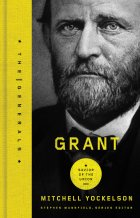
Grant: Savior Of The Union (book review)

I love to read the biographies of history-making people, so I have thoroughly enjoyed “The Generals” series that Thomas Nelson has produced. Almost every child in a US school has learned about the Civil War, and the two generals which stand at the forefront: Robert E. Lee and Ulysses S. Grant. But in Grant: Savior Of The Union, Mitchell Yockelson presents a picture of U.S. Grant that most have not seen.

If you recall what you learned about the Civil War in school, what sort of image comes to mind about General Grant? My textbooks presented a man who was a hard-charging, iron-willed general, who didn’t care how many soldiers he lost to win his battles. With this image in my mind, I could just imagine how distant he must have been as a husband, and how strict he probably was with his children.

Yockelson’s amazing biography of Grant shows nothing of the kind. Instead, we see Grant as a master tactician who thoroughly researched troop strengths and geography prior to the battle, to maximize his chances of success. He was a man who lived among his troops in the same housing they had, and who led from the front lines instead of from a safe distance away. He was a man who wanted his wife and children to be with him whenever it was possible, and was described by others as one of the most loving fathers they had ever seen.

And he was a man who loved the men under his care. After one notable victory, the northern newspapers praised Grant and his success. But Grant wrote home to his wife Julia: “These terrible battles are very good things to read about for a person who lost no friends, but I am decidedly in favor of having as little of them as possible.”

Our country owes a deep debt of gratitude to Ulysses Grant for his unshakable courage, deep compassion for his country and its citizens, and for his skills as a military leader. As Frederick Douglass said, “May we not justly say, will it not be the unquestioned sentiment of history that the liberty Mr. Lincoln declared with his pen General Grant made effectual with his sword—by his skill in leading the Union armies to final victory.”

A wonderful read for military history buffs and students of leadership. (By the way, I also reviewed the Thomas Nelson biography of Robert E. Lee here.)

I am a Thomas Nelson book reviewer.

I have also shared some quotes from this biography here.

Act Of Valor (movie review)

I have always had great respect and appreciation for the soldiers, airmen, sailors and Marines that keep us safe. After seeing Act Of Valor, that level of appreciation has gone up significantly!

This is a realistic movie. It’s not a Hollywood-stylized action film. It portrays that way our teams operate in the field to keep our country and her citizens safe. And it shows the real men and women, and the real emotions they have to deal with as they do a very dangerous job.

This movie is rated R for very realistic combat scenes, and some language. But for your teenagers that think they know what “real combat” is because of the video games they play, take them to see this movie and use it as a discussion of what’s really real.

Go see this film. And then thank an active duty service personnel or a veteran for their incredibly selfless service to our country.

Sherman (book review)

I find biographies of leaders fascinating. And few Civil War leaders are a more fascinating study than William Tecumseh Sherman, as portrayed in Sherman: The Ruthless Victor by Agostino Von Hassell and Ed Breslin.

Sherman was a man driven by two forces which almost seem contradictory: (1) the desire to make a name for himself, without the help of other; and (2) the almost debilitating fear of trying to attempt anything that wasn’t guaranteed to be successful. Whereas the first might drive him to be something of an entrepreneur, the second would seem to keep him satisfied with the status quo. Ultimately the entrepreneurial force drove him forward.

In fact, it drove him forward so ruthlessly and mercilessly, that his name is still uttered as a curse word in the South, and one of the most fearsome military machines—the Sherman tank—was so aptly named after him.

As I read this biography, I couldn’t help feeling sorry for General Sherman. For a man who had been given so many advantages and opportunities, he seemed not only ungrateful for them, but almost contemptuous of them. In the end, the only thing that gave him satisfaction was totally annihilating everything in his path; including his marriage, his family, and his friends. Sad!

But Sherman is still an important read for any student of leadership. I can’t help but wondering how history might have been different if a mentor might have come alongside Sherman to help him use his God-given talents in a more judicious and beneficial way.

I am a Thomas Nelson book reviewer.

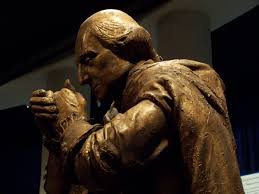
Happy Thanksgiving From George Washington

“Whereas it is the duty of all Nations to acknowledge the providence of Almighty God, to obey His will, to be grateful for His benefits, and humbly to implore His protection and favor; and Whereas both Houses of Congress have, by their joint committee, requested me ‘to recommend to the people of the United States a DAY OF PUBLIC THANKSGIVING and PRAYER, to be observed by acknowledging with grateful hearts the many and signal favors of Almighty God, especially by affording them an opportunity peaceably to establish a form of government for their safety and happiness.’

“NOW THEREFORE, I do recommend and assign THURSDAY, the TWENTY-SIXTH DAY of NOVEMBER next, to be devoted by the people of these States to the service of that great and glorious Being who is the beneficent author of all the good that was, that is, or that will be; that we may then all unite in rendering unto Him our sincere and humble thanks for His kind care and protection of the people of this country previous to their becoming a nation; for the signal and manifold mercies and the favorable interpositions of His providence in the course and conclusion of the late war; for the great degree of tranquility, union, and plenty which we have since enjoyed; for the peaceable and rational manner in which we have been enable to establish Constitutions of government for our safety and happiness, and particularly the national one now lately instituted; for the civil and religious liberty with which we are blessed, and the means we have of acquiring and diffusing useful knowledge; and, in general, for all the great and various favors which He has been pleased to confer upon us.

“And also, that we may then unite in most humbly offering our prayers and supplications to the great Lord and Ruler of Nations and beseech Him to pardon our national and other transgressions; to enable us all, whether in public or private stations, to perform our several and relative duties properly and punctually; to render our National Government a blessing to all the people by constantly being a Government of wise, just, and constitutional laws, discreetly and faithfully executed and obeyed; to protect and guide all sovereigns and nations (especially such as have shown kindness unto us); and to bless them with good governments, peace, and concord; to promote the knowledge and practice of true religion and virtue, and the increase of science among them and us; and, generally to grant unto all mankind such a degree of temporal prosperity as he alone knows to be best.

“GIVEN under my hand, at the city of New York, the third day of October, in the year of our Lord, one thousand seven hundred and eighty-nine.”