


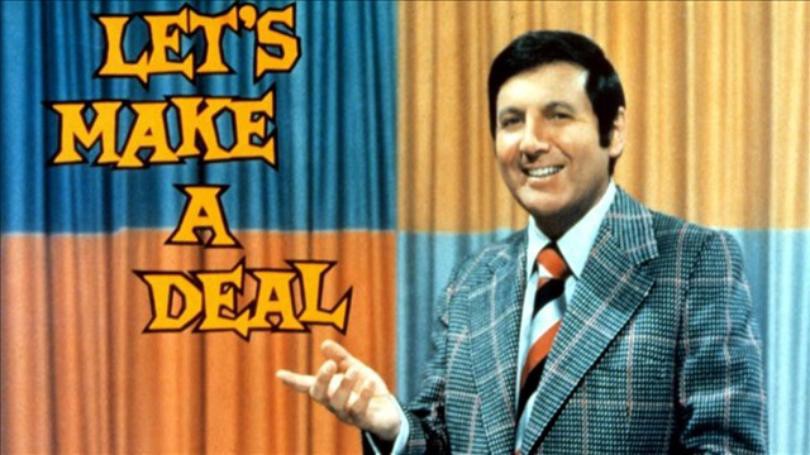
 Have you ever seen the 1970s game show Let’s Make A Deal? Contestants were given some tricky choices to make. They usually held something in their hand that was fairly valuable and were given the opportunity to trade what they could see for what they couldn’t see.
The anxiety about making this decision almost caused some people to have a nervous breakdown on the spot! And, oh, the emotional highs and lows when the contestants discovered what they won or lost!
I was reading about a let’s-make-a-deal moment in the Bible. Jerusalem is facing an imminent threat from an incredibly powerful man (2 Kings 18-19). Sennacherib sent this message to King Hezekiah, “Let’s make a deal” (18:23).
And he made a pretty compelling argument to take the deal. Sennacherib said, “No one who has ever stood up to me has survived before. I’m undefeated. I have a bigger, meaner army than you; more horses and chariots than you; and I’ve blocked your attempts to call on someone else to come rescue you. There’s no way out of this. C’mon, let’s make a deal!”
What makes a deal like this so appealing is that it’s all visible. It’s hard to say “no” to what you can see and say “yes” to what you can’t see.
Hezekiah knew God could deliver them, but would He deliver them? Hezekiah couldn’t see God, but he could see all of Sennacherib’s forces. What to do, what to do??
Hezekiah made the right deal. He put his trust in God! Although He was unseen, Hezekiah believed that God’s deal was better than Sennacherib’s deal. And Hezekiah was not disappointed in the deal he made (19:35-37).
What about you? Are you facing insurmountable odds today? Do you feel like you need to make a deal? Is what you can see more compelling than what you can’t see? I can promise you that any deal that you might make that doesn’t throw your trust entirely on God is a bad deal. A very bad deal!
So we’re not giving up. How could we! Even though on the outside it often looks like things are falling apart on us, on the inside, where God is making new life, not a day goes by without His unfolding grace. These hard times are small potatoes compared to the coming good times, the lavish celebration prepared for us. There’s far more here than meets the eye. The things we see now are here today, gone tomorrow. But the things we can’t see now will last forever. (2 Corinthians 4:16-18, The Message)
Don’t give up! Don’t make a bad deal! Trust God. His way is always the best deal!


 Craig T. Owens