Evangelizing The Evangelized?

I was talking to a friend the other day about church growth, and we both notice something disturbing: Most of the “new” people coming to church are actually not so new. Much of what has been called church growth is actually church transplants.

We’re not reaching the lost. Ouch!

I think Howard Hendricks nails it with this:

The Gospel is failing to produce results in some places today because it lacks an audience. Christians in churches are busy evangelizing the evangelized. We constantly face the danger of developing a fortress mentality: making occasional excursions into unfriendly territory and scurrying back to the safety of our church and its people when opposition arises. We tend to derive security from friendly surroundings rather than from Jesus Christ, and so we fail to penetrate our society for Christ.

I pray my greatest strength is my relationship with Jesus Christ, and that my driving passion is for others to know this beautiful relationship too.

May God help me to have an audience in Cedar Springs!

God Made You You

God doesn’t make mistakes.

Ever!

That means you are not a mistake. You might make a mistake (or, if you’re like me, maybe lots of mistakes), but you are not a mistake.

God had you in mind before He created this universe. He knew the perfect time to send you to Earth. And He knew just what you needed to be.

You are God’s workmanship, created in Christ Jesus to do good works, which God prepared in advance for you to do. (Ephesians 2:10)

STOP comparing yourself to others.

STOP beating yourself up.

STOP doubting how special you are.

Even the fun and entertaining Dr. Seuss got it:

Today you are you! That is truer than true!
There is no one alive who you-er than you!

“You are most attractive when you are yourself, simply because real is attractive.” —Howard Hendricks

More Amateurs Needed

Did you know that the origin of the word clergy comes from the Latin meaning “learned men”? These are the men and women who are supposed to lead our churches, because they have the education that others don’t. They are professionals.

Now compare that with the definition of laity: “the people outside of a particular profession, as distinguished from those belonging to it.”

Did you catch that? The laity are outside and uneducated. They are amateurs.

The origins of clergy is traced back to the 12th century, and laity first appears in the 16th century. But long before this, the Apostle Paul had a different idea —

Take a good look, friends, at who you were when you got called into this life. I don’t see many of “the brightest and the best” among you, not many influential, not many from high-society families. Isn’t it obvious that God deliberately chose men and women that the culture overlooks and exploits and abuses, chose these “nobodies” to expose the hollow pretensions of the “somebodies”? (1 Corinthians 1:26-28 from The Message, emphasis added)

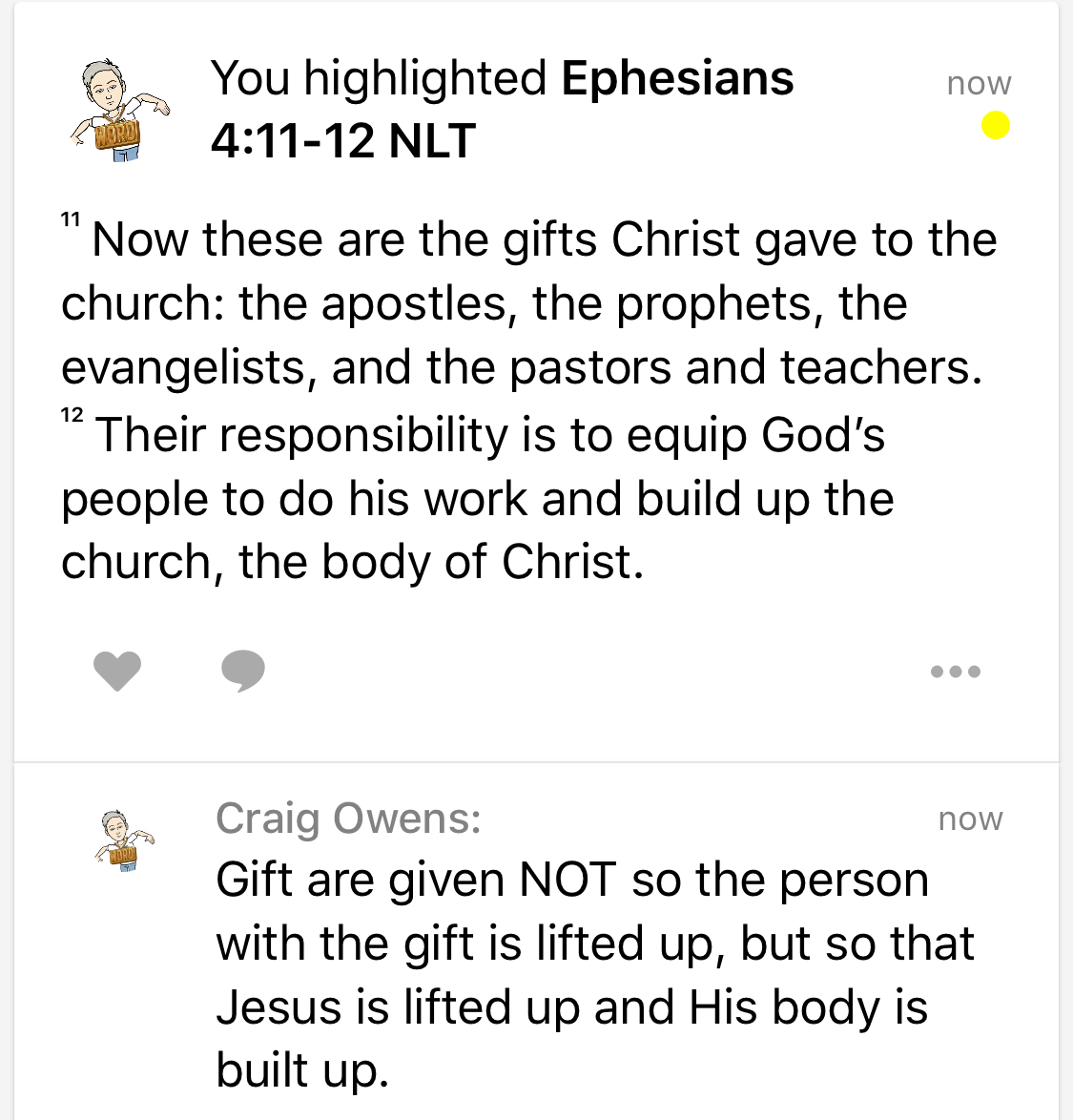
There is a HUGE PROBLEM when we think that only the professional clergy is equipped to do the ministry of the church! What makes a healthy church (like the first century church we read about in the book of Acts) is when EVERYONE is actively involved in ministry.

These words from Howard Hendricks are tough to hear, but right on target:

“I believe a great problem in evangelicalism today—whether in the local church, missions, seminary education, or what have you—is we have too many big-time operators! And too few servants. … 

“The typical church hires a clergyman to rob them of the privilege of exercising Christ’s gifts. … The greatest curse on the Church today is that we are expecting a small group of professionals to get God’s work done.”

I hope I haven’t stepped on too many toes with this one. My intent is not to offend, but to get the church thinking. I want to see EVERYONE that calls themselves a Christian actively involved in ministry.

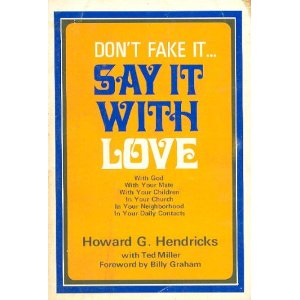
Say It With Love (book review)

There is a verse in the Bible that tells us to speak the truth in love. And that’s exactly what Howard Hendricks lives by in Say It With Love: The art and joy of telling the Good News.

For Professor Hendricks, the good news about Jesus Christ is not something that is just shared by a pastor on Sundays, but it’s something all Christians should be sharing all the time. And not just with words either, but with our very lives.

Dr. Hendricks challenges us to know why we are sharing the message of God’s love; to put ourselves in a position to share that message effectively; and then to live that message out in all of the roles of our life. This third section was the most impactful for me. Dr. Hendricks talks persuasively about living the message…

  • …with God
  • …with your mate
  • …with your children
  • …in your church
  • …in your neighborhood
  • …in your daily contacts

This is both a hopeful book and a convicting book. It’s an easy read with lots of Dr. Hendricks’ personal stories sprinkled in as examples. If you want to do a better job communicating the message of the gospel, you should check out this book.