No Such Thing As Overnight Success

Although to the outsider it sometimes appears that way, success does not happen overnight. So much of the work and preparation and study that are done are simply unnoticed by others.

On the flip side, there is no such thing as an overnight failure either. So much of the work and preparation and study that was left undone is also usually unnoticed by others.

Both public success and public failure are the culmination of years of private decisions. Every single day I am either preparing for success or preparing for failure.

The battles are being won or lost before I even take the field. It’s the everyday private practice that determines the game day public performance.

I have to pay careful attention to the “little things” in private every day if I hope to successfully handle the “big things” in public someday.

The heights of great men reached and kept,
Were not attained by sudden flight,
But they, while their companions slept,
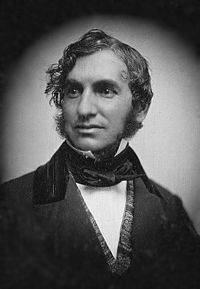
Were toiling upwards in the night. —Henry W. Longfellow


What are you doing to prepare today?

Burn, Baby, Burn

It’s been a debate around golfing circles for years as to which PGA pro gets credit for responding to a fan who quipped, “That was a lucky shot!” The famous reply (variously attributed to either Gary Player, Arnold Palmer or Lee Trevino) is, “You know, the more I practice, the luckier I seem to get.”

Regardless of who said it, there’s so much truth in that statement. Here’s what I’ve learned about success:

NO ONE is an over-night success. “The heights of great men reached and kept // Were not attained by sudden flight // But they, while their companions slept // Were toiling upwards in the night.” —Henry Wadsworth Longfellow

NO ONE is a half-hearted success. “Success is the maximum utilization of the ability that you have.” —Zig Ziglar

NO ONE is successful on their own. “Leaders will not experience long-term success unless a lot of people want them to.” —John Maxwell

SUCCESS requires a high price. “Achievers choose what losers won’t and pay the price that others don’t.” —Anonymous

SUCCESS takes dedicated time. Malcolm Gladwell in his book Outliers quotes the 10,000 Hour Rule. He writes, “The biggest misconception about success is that we do it solely on our smarts, ambition, hustle and hard work.” Instead, he says that highly successful people have put in a minimum of 10,000 hours in a single area (think the Beatles with their music or Bill Gates with his computer programming).

SUCCESS starts with personal initiative. “Success isn’t a result of spontaneous combustion. You must set yourself on fire.” —Arnold H. Glasow

John Wesley explained how he drew such large crowds in the First Great Awakening by stating, I set myself on fire, and the people come to see me burn.” If you want to be successful, you must set yourself on fire, pay the price, and do the time.

Are you ready? If so, then burn, baby, burn!

Tell Your Story

People often ask me why I read so much, or even why I read the things I read. I like to read widely: classics to contemporary, history to biographies, and even a little poetry.

Tim Sanders wrote a book called Love Is The Killer App. In this wonderful book, he says that reading and studying should be motivated by love. We read and learn so that we can be informed enough to help others who are in need. Not reading just to read, but reading with a purpose. Reading to help tell someone a story. I haven’t found a book that does this better than the Bible.

The world’s greatest storyteller (ever!) was Jesus of Nazareth. Check this out:

With many stories like these, He presented His message to them, fitting the stories to their experience and maturity. He was never without a story when He spoke (Mark 4:33-34, The Message paraphrase).

Jesus could tell a story to anyone at any time. He learned, He studied, He observed, so He would always be ready. He frequently used whatever was at hand to tell His stories—a child, a farmer, fish, bread made with yeast, a coin, a bridal party—but He had to know something about each of those things in order for His stories to be effective for each person’s “experience and maturity.”

Once Jesus encountered a man so demonized that he spent his life naked and living in the graveyard (my friend Jim Wiegand calls him “the naked, cat-eating guy”!). Jesus set this man free from his demons. When this newly-freed man wanted to accompany Jesus, He told him, “Go home to your own people. Tell them your story” (Mark 5:19, The Message).

Tell them YOUR story.

The best story you can tell is your story.

It’s wonderful to read to be informed—I highly encourage this. I love to be able to say, “Benjamin Franklin said…” or “I love the Longfellow poem about…” or “Stephen Covey wrote that we should….” But it’s so much more effective to say, “Here’s what I have learned from my personal encounter with Jesus. Here’s MY story of what Jesus did for me!”

What about you? Do you have a story to tell? If you’re in a relationship with Jesus, you always have a story to tell. Keep walking with Jesus. Keep reading His love letter to you written on every page of the Bible. Then tell YOUR story—the best story of all!

Poetry

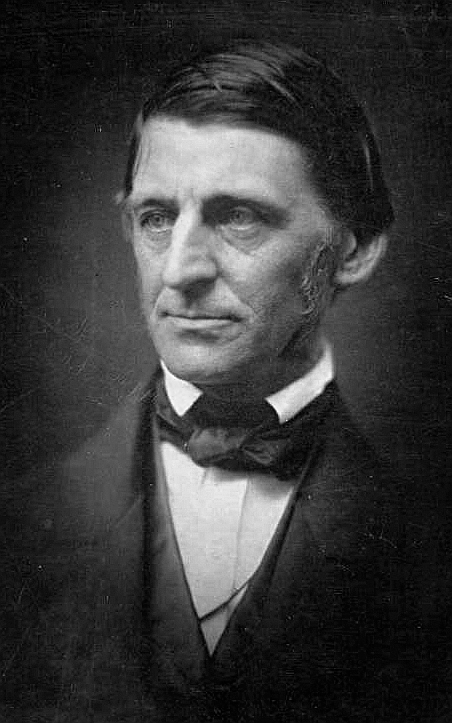
Just finished a nice book of poems by Ralph Waldo Emerson and I thought I’d share a few maxims with you—

  • “To be great is to be misunderstood.”
  • “Happy is the house that shelters a friend.”
  • “Nothing great was ever achieved without enthusiasm.”
  • “A friend is a person with whom I may be sincere. Before him, I may think aloud.”
  • “Beauty without grace is the hook without the bait.”
  • “Life is not so short but there is time for courtesy.”
  • “Beware when the great God lets loose a thinker on this planet. Then all things are at risk.”
  • “No man thoroughly understands a truth until he has contended against it.”
  • “In skating over thin ice, our safety is in our speed.”

If you haven’t read any poetry lately, I encourage you to give it a try. It sounds/reads differently, but the rhythm and pace sort of sings to your mind and heart as you read it. For Americans I recommend starting out with some American poets like Emerson or Henry Wadsworth Longfellow; for you Brits, try some Robert Browning.

Happy reading!