


Listen to the podcast of this post by clicking on the player below, and you can also subscribe on Apple, Spotify, or Audible.
 Have you ever heard a parent say to their child, “Because I’m the parent and I say so”?
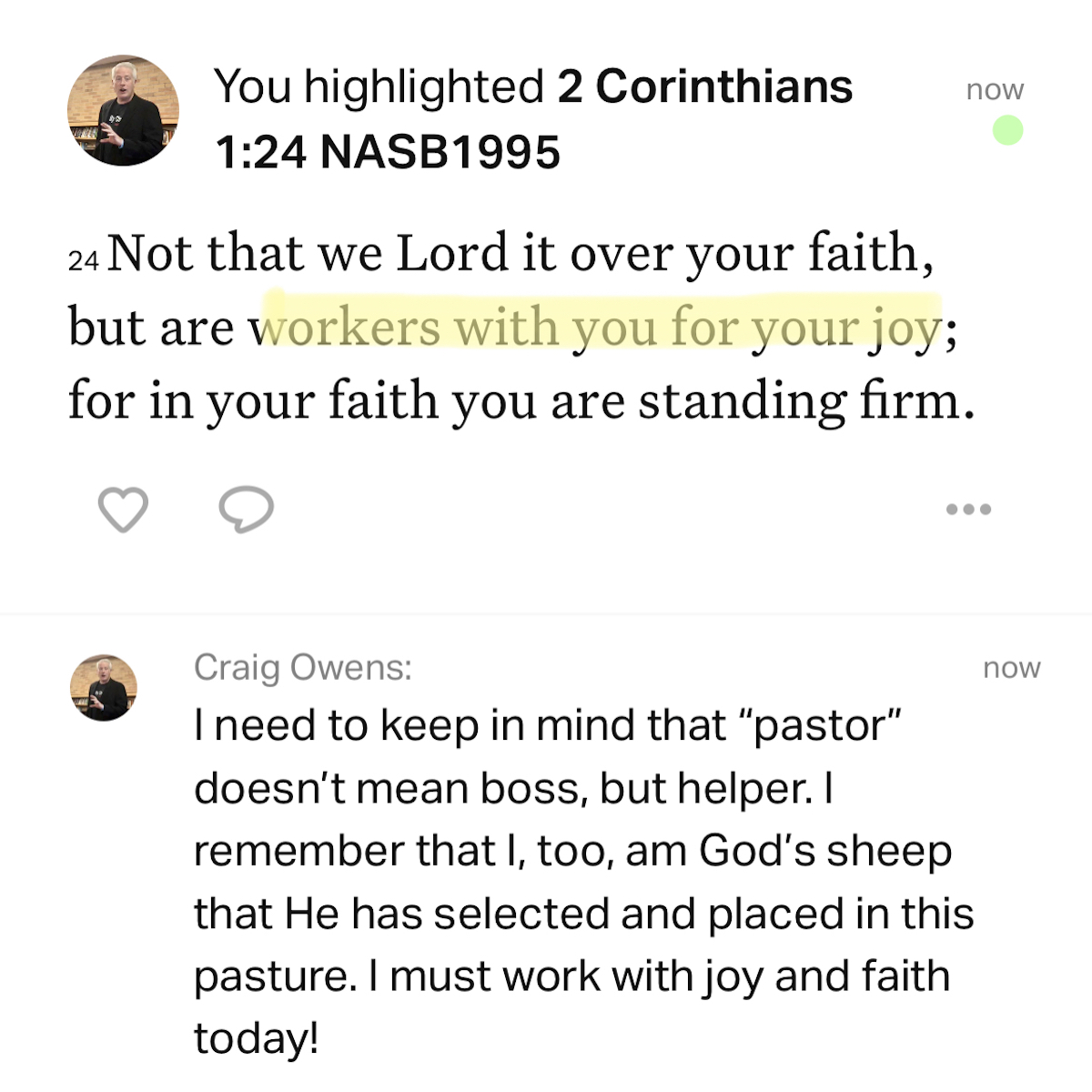
Have you ever heard a pastor say that to a sheep in his flock?
There is a certain authority that comes with God’s calling on a shepherd leader, but how exactly are pastors to use that authority? Or asked another way, how are shepherds to use their shepherding staff?
When Paul is writing to his friend Titus some instructions for pastors, he uses a Greek word for “authority” three times.
First, in regard to his own calling he says, “Paul, a bond-servant of God and an apostle of Jesus Christ, for the faith of those chosen of God and the knowledge of the truth which is according to godliness … but at the proper time revealed His word in the proclamation with which I was entrusted according to the commandment of God our Savior” (Titus 1:1, 3 NASB).
The phrase “chosen of God” in verse 1 literally means the same thing he says in verse 3: “according to the commandment of God.”
The third usage of this word is when Paul tells Titus that he has this same authority: “These things speak and exhort, and rebuke with all authority. No one is to disregard you” (Titus 2:15).
Interestingly, Paul uses this Greek word a total of seven times in his letters, with three of those times being in this short letter to Titus.
Paul also uses this word three times in his two letters to the saints in Corinth (1 Corinthians 7:6, 25; 2 Corinthians 8:8). But in all of three of these instances, Paul says, “I choose not to use my God-given authority on this, but I’m asking you to make a good choice.”
The only other time Paul uses this word in a letter is found in his closing remarks to the saints in Rome, with the emphasis there on the authority of the Word of God which he preaches—
Now to Him who is able to establish you according to my gospel and the preaching of Jesus Christ, according to the revelation of the mystery which has been kept secret for long ages past, but now has been disclosed, and through the Scriptures of the prophets, in accordance with the commandment of the eternal God, has been made known to all the nations, leading to obedience of faith. (Romans 16:25-26 NASB)
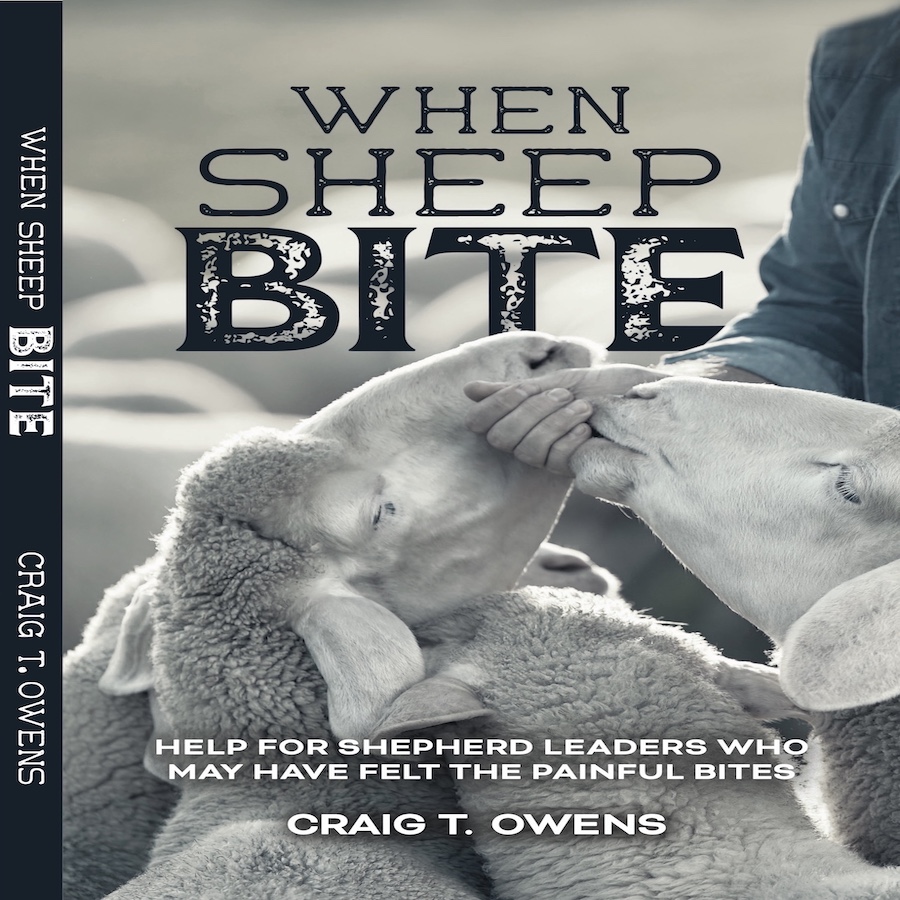
Questioning of our pastoral authority is one of the sheep bites I discuss in my book When Sheep Bite. Here is one passage from that chapter—
 When our conversation with criticizing sheep hasn’t gone well, and when those unhealthy sheep begin to gossip and then slander, it’s inevitable that they will eventually began to question your authority as a shepherd. Perhaps they think you’re too young and naive, or too old and out of touch. They may question your motives, or the vision you’ve imparted for the church, or your ability to follow through on what you have already shared. Whatever the case, these biting sheep seem to be implying that they know better than you do how this pasture should be run.
During times like these, it is tempting to want to “prove” that we are qualified, that we do know what we’re doing, and that we can indeed successfully pursue the vision we’ve articulated for them. Once again, it’s natural to want to say, “I’ll show you just how qualified I am!”
Before we respond, we need to recognize the source of our authority. There is a certain authority that comes with a position or an office. For instance, a parent can say to a child who is questioning a rule, “Because I’m the parent and I say this is how it is going to be.” We see similar positional authority for CEOs, police officers, school teachers, and pastors. But like the little boy we met at the beginning of this book, people may say to a positional leader, “I may be obeying you on the outside, but on the inside I’m questioning everything you’re saying!”
Far greater than positional authority is moral authority. This is authority that comes not merely from a title or position, but from who conferred that title or position on the leader. If God has called us and appointed us to this pasture, that is all the authority we need.
Let me wrap up with four takeaways for shepherd leaders:
- A godly leader’s authority is imparted by God. Keep in mind these three powerful words, “God chose me.” That means you have nothing to prove.
- As a godly leader, you are “entrusted” with your authority and that means you have to give an account to God for its application. Don’t let the pain of the moment tempt you to react in a shortsighted way.
- There are times to use God’s authority to hold the line; specifically when addressing issues which are biblical or unbiblical (Titus 1:9-14, 3:1-8).
- There are also times for us to sheath this authority; like when addressing a non-biblical issue (Titus 3:9).
Being a godly shepherd leader is not for the faint of heart! But God has called YOU which means He has also equipped YOU to respond appropriately in each situation.
My book When Sheep Bite is packed with biblical examples, personal experiences, practical applications, and prayers for each of these biting problems you will face. I hope you will pick up a copy today.
►► Would you please prayerfully consider supporting this ministry? My Patreon supporters get behind-the-scenes access to exclusive materials. ◀︎◀︎


 Craig T. Owens
February 18, 2025 at 5:05 am
[…] The other Scriptures I reference in this episode are Ephesians 4:15; Proverbs 27:5; Numbers 20:2-12. And the blog post I referred to in this video is How Are Godly Leaders To Use Their Authority. […]
LikeLike