


Listen to the podcast of this post by clicking on the player below, and you can also subscribe on Apple, Spotify, or Audible.
 I’ve talked before about the benefits of calling the Old and New Testaments the First and Second Testaments. This helps me not to subconsciously slip into the thought that “old” means outdated or that “new” means a replacement of what came before it. When I say First and Second I remember that there cannot be a Second without a First, that the First anticipates the Second and the Second fulfills the First.
The people of the First Testament experienced the Spirit of God in an often-repeated phrase: “the Spirit of the Lord came on” someone. It usually came on them for a specific task or season. For instance…
- 70 leaders to help Moses (Numbers 11:25)
- the judges that delivered Israel from their enemies (Judges 3:10, 6:34, 11:29, 14:6, 15:14)
- the anointing for Israel’s king (1 Samuel 16:13)
- empowerment for prophets to prophesy (Ezekiel 11:5)
(Check out all of the above references by clicking here.)
When the Holy Spirit came on these men, there was a noticeable supernatural anointing and empowerment, but more times than not these men also had visible and sometimes crippling stumbles.
What happens on the outside often stays on the outside. Sort of like the little boy whose mom brought him to church one Sunday. The little boy was constantly standing up on his chair and disturbing everyone around him. Finally, the exasperated mother whispered, “If you don’t sit down I’m going to take you to the restroom and spank you.” The little boy immediately sat down with his arms tightly crossed. He looked at his mom and said, “Outside I may be sitting down but inside I’m standing up!”
God looks at the heart. He told the Israelites that their inward defiance didn’t outweigh their outward religious practices. And Jesus said that people who prophesied, cast out demons, and performed miracles, but still had an unrepentant heart, would hear Him say, “I never knew you” (Isaiah 1:12-13; Matthew 7:21-23).
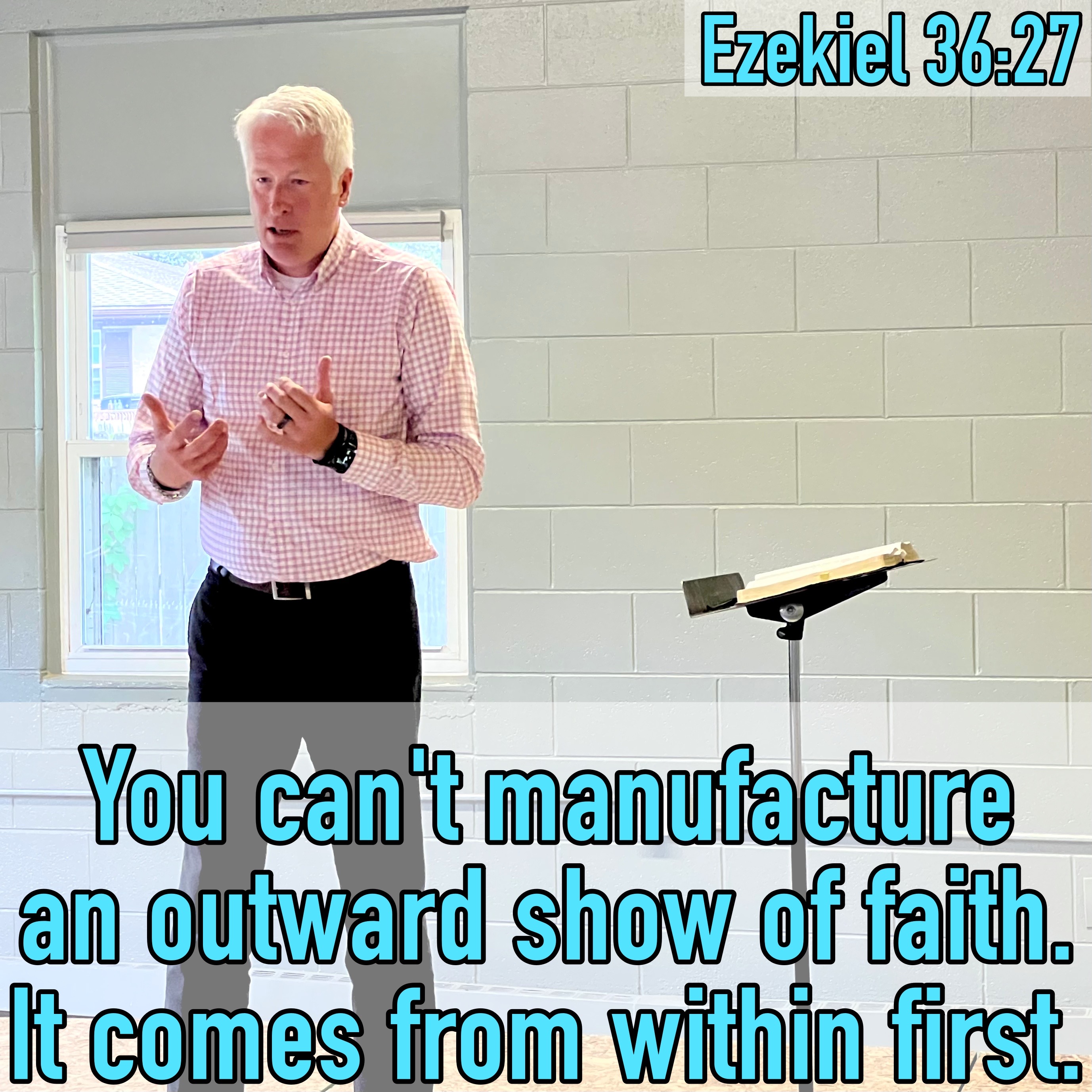 In the First Testament, we see a desire for the Holy Spirit to be more than on—a desire for Him to come in. David prayed, “Create in me a pure heart, O God, and renew a steadfast spirit within me” (Psalm 51:10). And God promised His people, “I will give them an undivided heart and put a new spirit in them … And I will put My Spirit in you and move you to follow my decrees and be careful to keep My laws” (Ezekiel 11:19, 36:27).
That is exactly what happened on that Pentecost Sunday immediately following Christ’s resurrection and ascension. The Christians were baptized in the Holy Spirit. He came in them and brought them into the Godhead (John 14:20).
Jesus described this “in-ness” in the picturesque language of a branch joined to the vine. The branch cannot produce any fruit on its own, but it abides in the vine so that the fruit-producing power can flow into the branch (see John 15:1-5).
Paul identified this fruit of the Spirit as “love, joy, peace, forbearance, kindness, goodness, faithfulness, gentleness and self-control,” and he concluded with the phrase, “against such things there is no law” (Galatians 5:22-23). The law always sets limits, but when the Holy Spirit abides in us, the production of fruit is limitless!
Being baptized in the Holy Spirit means that we allow Him to come in us and then to work on us. It’s only when the Holy Spirit has worked in us that can He flow through us to others. Jesus said that we would receive the Spirit’s empowerment to be witnesses—that’s an inward change that produces an outward fruit.
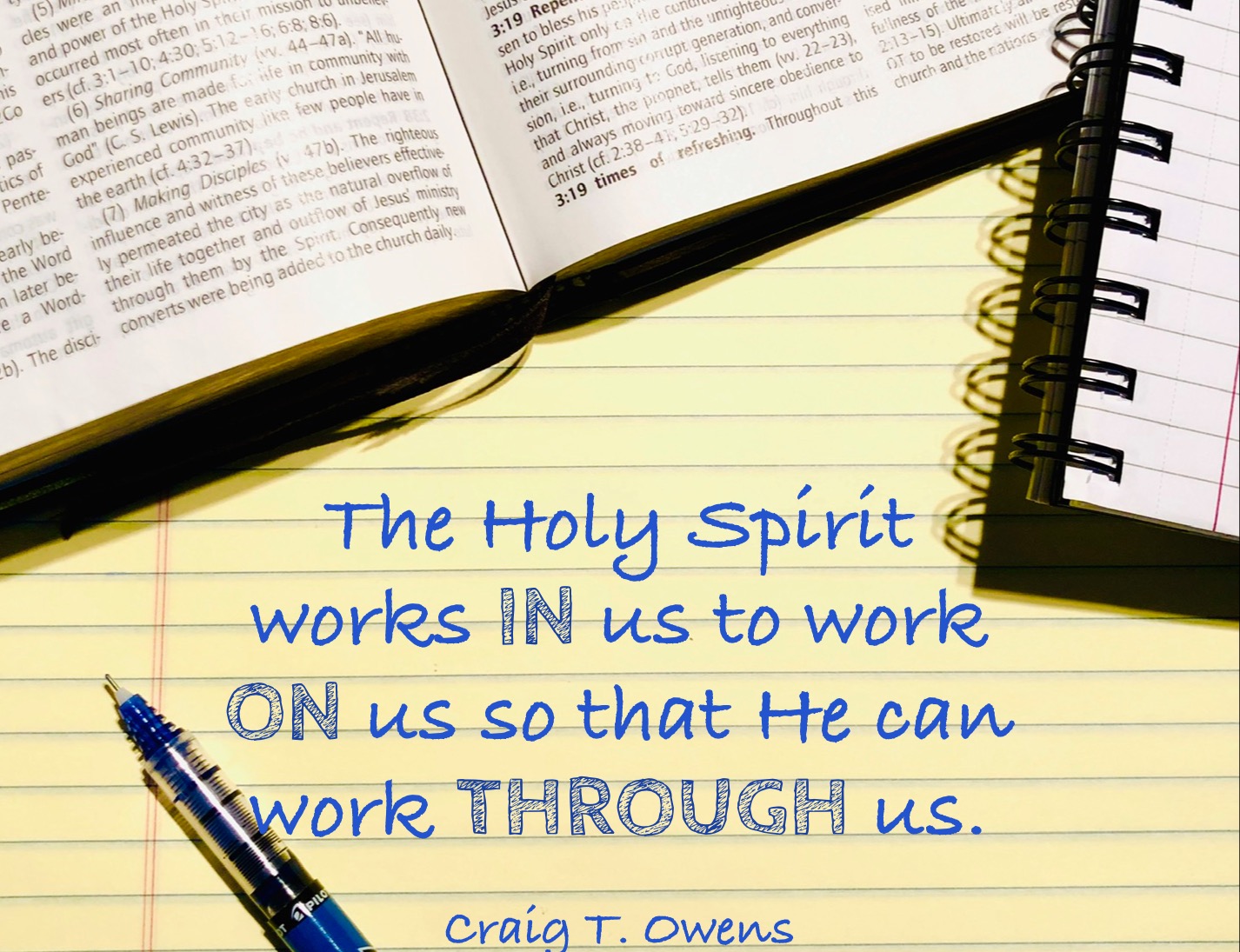
The Holy Spirit works in us to work on us so that He can work through us. So don’t stop at just salvation, but be baptized in the Holy Spirit!
If you’ve missed any of the messages in our series on the Pentecostal experience, you can find all of those messages by clicking here.
►► Would you please prayerfully consider supporting this ministry? My Patreon supporters get behind-the-scenes access to exclusive materials. ◀︎◀︎


 Craig T. Owens
June 12, 2023 at 6:11 am
[…] In, On, And Through […]
LikeLike