


Listen to the podcast of this post by clicking on the player below, and you can also subscribe on Apple, Spotify, or Audible.
 I do my best to take care of my physical body. I exercise every day, l try to watch what I am eating, and I attempt to get the correct amount of sleep. I attend to all of these things because I want to keep my body as healthy as I can.
But in all of these efforts, I would never presume that I could determine how long I’m going to live. I thought of this the other day when I read an interesting statement from Jesus.
In my Bible, this section of Luke’s Gospel has been given the heading “Do Not Worry.” Jesus tells us that we shouldn’t fret about our lives, our food, or our clothing because our Heavenly Father will take care of those things. Then Jesus says, “Since you cannot do this very little thing, why do you worry about the rest?” (v. 26).
What is this “very little thing” Jesus says I cannot do? In the previous verse, He says, “Who of you by worrying can add a single hour to his life?”
I don’t know about you, but that seems like a very big thing to me! How could I add any time to my life!? I have no idea when my time is up. If I think that controlling the number of days I have left to live is a big thing, then the daily concerns of providing food, clothing, and shelter, seem small by comparison.
But Jesus says determining the length of my days is a very little thing. If that’s how He sees it, how infinitesimal it must be for Him to provide the basics of life for His trusting children!
This is why Jesus says to us over and over again, “Do not worry.”
If anything will rob my life of years and my years of life, it is worry. Every time worry creeps into my heart, I need to be quick to turn that fretful concern over to my Heavenly Father. He loves me so much that Jesus promised, “Your Father has been pleased to give you the [eternal] kingdom.”
If God is giving me eternity, that means there is never a cause for me to worry about infinitesimal things!
►► Would you please prayerfully consider supporting this ministry? My Patreon supporters get behind-the-scenes access to exclusive materials. Like this video where I talk about the logic in Psalm 119. ◀︎◀︎
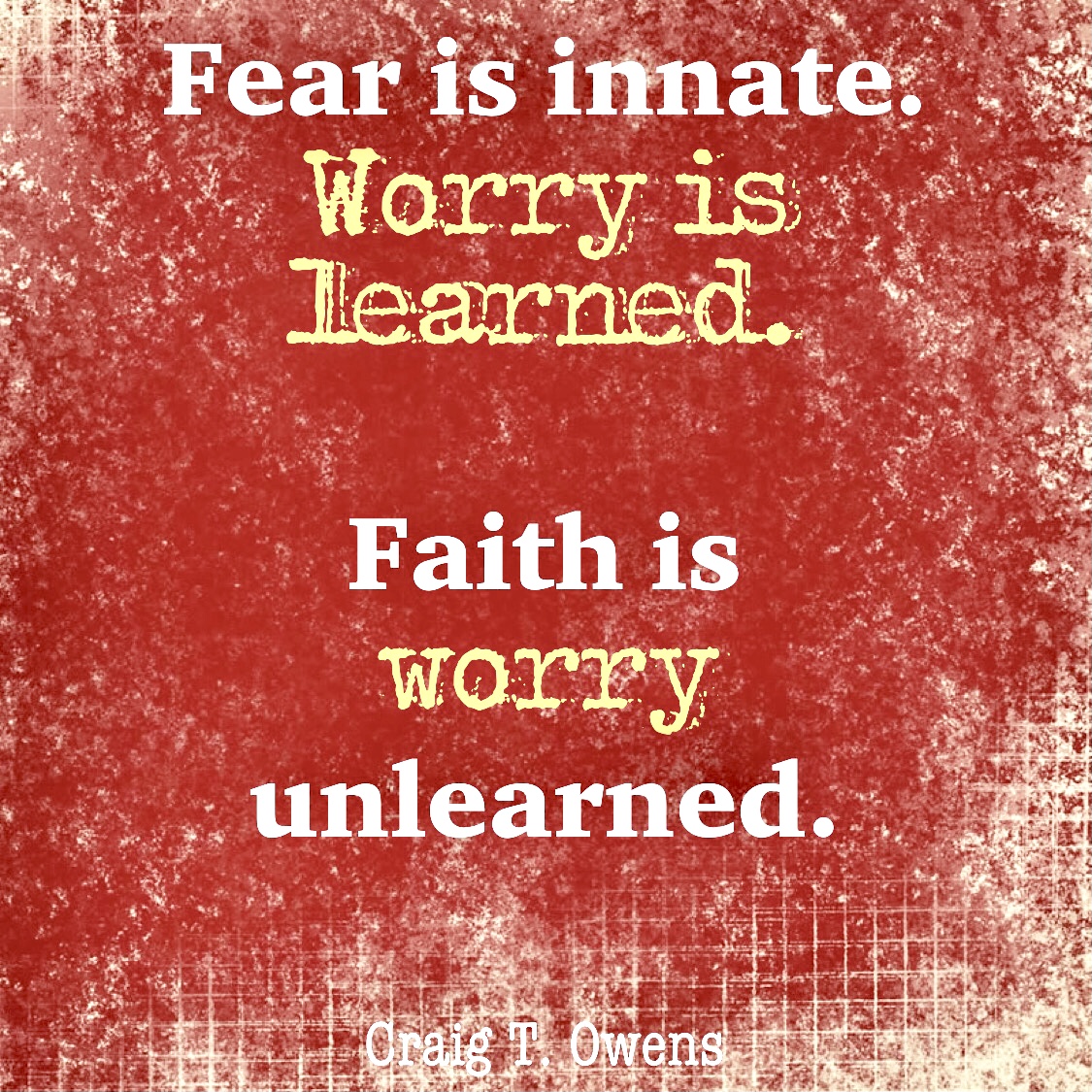


 Craig T. Owens