


Listen to the podcast of this post by clicking on the player below, and you can also subscribe on Apple, Spotify, or Audible.
 This whole series of messages is about how God can turn our grief into joy. On Easter Sunday we celebrate the most joy-filled event in all of history: the resurrection of Jesus!
At our Good Friday service, we talked about how the day was anything but good for those who were there. The day is only good for people who have been rescued from eternal, inescapable grief.
The Bible tells us that all of us have sinned and the penalty for that sin is eternal separation from God (Romans 3:23, 6:23a). But Jesus died in our place (Romans 5:8) to turn our eternal grief into eternal joy. Check out this out: God promises to exchange the cup of wrath and judgment with the cup of righteousness and peace (Isaiah 51:17-22). That’s exactly what Jesus accomplish with this death and resurrection!
(Check out all of the biblical references in this post by clicking here.)
On Friday, no one was joyful. In fact, it was just the opposite: Grief gripped their hearts and held them in fear. Probably the only one who was happy on that day was the devil.
On Saturday, the clouds of grief and fear darkened even more. It was the Sabbath day, and the Jewish followers of Jesus would still have to attend the synagogue and go through the motions of the day. Can you imagine how hollow and meaningless all of the activities seemed?
Then Sunday morning arrived. Jesus had predicted this (Matthew 12:40), but when some of the women who attended to His needs during His years of ministry came to the tomb, they were completely unprepared for what they found (Luke 24:1-7).
Jesus told them that they would see their grief turned to joy (John 16:20, 22; Luke 22:53), but when these ladies told His disciples, they still couldn’t comprehend it (Luke 24:9-12, 19-24).
Grief can so grip our emotions, that it will effect us physically as well: our eyes are clouded, our mind is fuzzy, and our ears seem stuffed with cotton (John 20:14-16; Luke 24:15-17).
So what finally convinced them? Their own hearts!
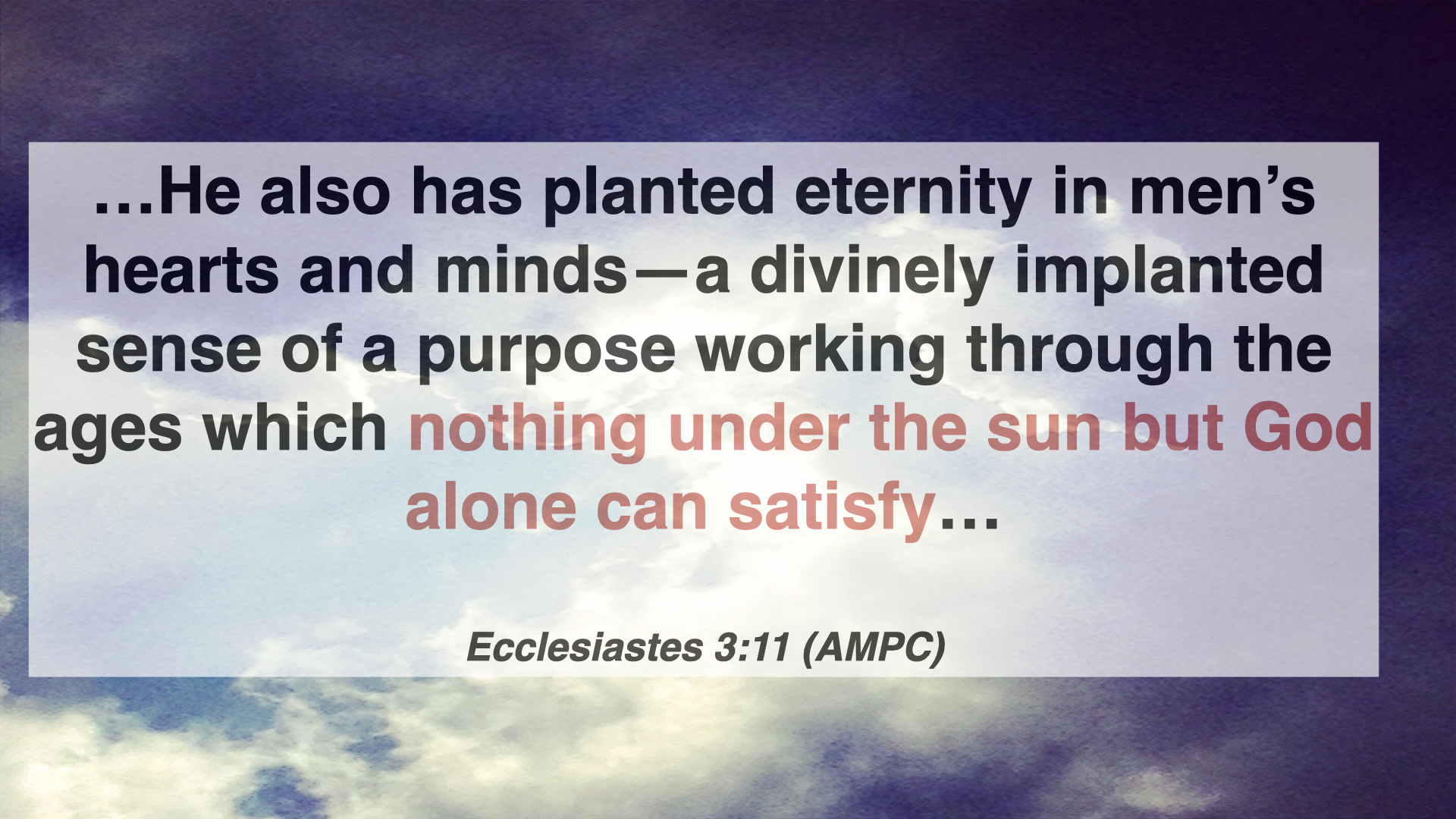 Solomon wrote, “He has planted eternity in the human heart” (Ecclesiastes 3:11). The AMPC says: He also has planted eternity in men’s hearts and minds—a divinely implanted sense of a purpose working through the ages which nothing under the sun but God alone can satisfy.
Mary finally saw Jesus and saw her grief turned to joy when she heard Jesus say, “Mary.”
These men on the road said their hearts burned in them when Jesus explained the Scripture to them (Luke 24:31-32, 27).
And when the other disciples were locked away for fear of the Jews (John 20:19), Jesus spoke to them about how His Word was fulfilled in His actions (Luke 24:44-46).
There is a hymn that ends, “You ask me how I know He lives, He lives within my heart.” There is something unmistakable and irrefutable when someone knows what it is to have their sins forgiven—to have their grief turned to unquenchable joy!
In fact, the best proof of a risen Savior is seeing a life freed from gripping grief that used to plague them.
If you don’t know Jesus as your Savior, the thought of the end of life and what comes next probably fills you with a sense of uneasiness. It doesn’t have to be this way!
If you do know Jesus, please remember that your best testimony is a life that doesn’t get bogged down in the same grief the world experiences. When you can show supernatural joy while everyone else is gripped by grief, people will turn to you (1 Peter 3:15).
Please check out the other messages in this series called Grief Into Joy by clicking here.
►► Would you please prayerfully consider supporting this ministry? My Patreon supporters get behind-the-scenes access to exclusive materials. ◀︎◀︎


 Craig T. Owens