Radical Together (book review)

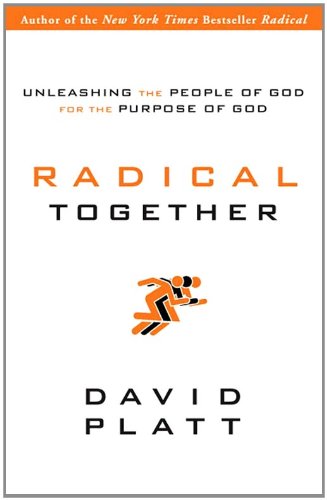
In Radical Together, David Platt follows up on his book Radical by focusing on how followers of Jesus need to rethink the purpose of the church.

Throughout the book, David continually challenges the age-old paradigms of “church,” and he calls on Christians to return to a more biblical approach to living out their faith. Some of my favorite wake-up calls come in these quotes:

“So we decided to stop planning, creating and managing outreach programs and to start unleashing people to maximize the ministry opportunities God had already planned and created for them.”

“Be careful not to let programs in the church keep you from engaging people in the world with the Gospel.”

“Discussions in the church more often revolve around what we want than what [God] wills. Almost unknowingly, the church becomes a means of self-entertainment and a monument to self-sufficiency.”

And he also addresses pastors specifically in the way they lead their churches. One quote from David really caused me to pause—

“The Bible is not in a church leader’s hands so he or she can give people answers to every question they have and guidance for every situation they face. Instead, the Bible is in a church leader’s hands to transform people into the image of Christ and to get people in touch with the Holy Spirit of God, who will not only give them counsel for every situation they face but will also walk with them through those situations. And when church leaders use God’s Word for this purpose, then church members develop a healthy dependence on God’s Spirit and a healthy admiration of God’s glory.”

Although Radical Together was really written as a sequel to Radical, I didn’t read the first book. With that being said, I didn’t feel like I was only getting part of the story, as Radical Together clearly stands alone.

If you are tired of same-old-same-old church, Radical Together just might be the wake-up call that you need.

I am a Multnomah book reviewer.
An Unabashed Appeal To Join Religion And Government

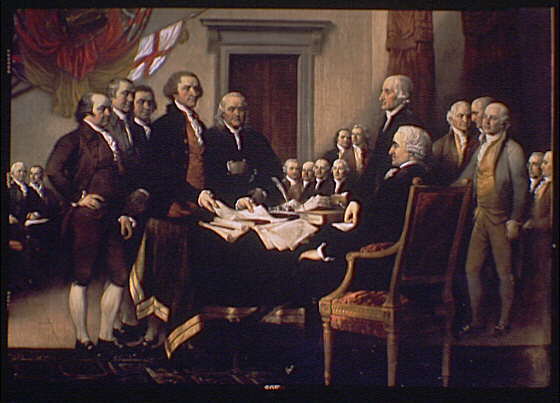
Talk about taking a passing remark out of context! In a personal letter, Thomas Jefferson mentions how church and state should be separate. But I’m convinced where we’ve ended up is no where close to what he intended! I’m so tired of historical revisionists trying to convince us that biblical values and Judeo-Christian ethics had no place in the founding of our nation. Or—worse yet—that they have no place now. Consider these founding remarks…

“…Having undertaken, for the Glory of God, and advancements of the Christian faith and honor of our King and Country, a voyage to plant the first colony in the Northern parts of Virginia….” —Mayflower Compact

“And for the support of this Declaration, with a firm reliance on the protection of Divine Providence….” —Declaration Of Independence

“I have lived, Sir, a long time; and the longer I live the more convincing Proofs I see of this Truth, That God governs in the Affairs of Men!—And if a Sparrow cannot fall to the Ground without His Notice, is it probable than an Empire can rise without His Aid? — We have been assured, Sir, in the Sacred Writings, that ‘except the Lord build the House, they labor in vain that build it.’ I firmly believe this; and I also believe that without His concurring Aid we shall succeed in this political Building no better than the Builders of Babel…. I therefore beg leave to move, That henceforth Prayers, imploring the Assistance of Heaven, and its Blessing on our Deliberations, be held in this Assembly every Morning before we proceed to Business.” —Benjamin Franklin, Constitutional Convention

It is impossible to rightly govern a nation without God and the Bible.” —George Washington

“Suppose a nation in some distant Region should take the Bible for their only law Book and every member should regulate his conduct by the precepts there exhibited! What a Utopia, what aParadise would this region be.” —John Adams

And, of course, the quotes could go on and on and on. But one of my favorites:

“Yes, if our religion had more to do with our politics; if, in the pride of our citizenship, we had not forgotten our Christianity; if we had prayed more and wrangled less about the affairs of our country, it would have been infinitely better for us at this day.” —John Mitchell Mason (1770-1829), in his book published in 1800

Happy Birthday, America! May GOD bless you!

I Am Debtor

A poem penned by Robert M’Cheyne in 1837:

When this passing world is done,
When has sunk yon glaring sun,
When we stand with Christ in glory,
Looking o’er life’s finished story,
Then, Lord, shall I fully know—
Not till then—how much I owe.

When I stand before the throne,
Dressed in beauty not my own,
When I see Thee as Thou art,
Love Thee with unsinning heart,
Then Lord, shall I fully know—
Not till then—how much I owe.

Even on earth, as through a glass
Darkly, let Thy glory pass,
Make forgiveness feel so sweet,
Make Thy Spirit’s help so meet,
Even on earth, Lord, make me know
Something of how much I owe.

Chosen not for good in me,
Wakened up from wrath to flee,
Hidden in the Savior’s side,
By the Spirit sanctified,
Teach me, Lord, on earth to show,
By my love, how much I owe.

What are you going to do with how much YOU owe?