A Word That’s Hard To Say

Listen to the podcast of this post by clicking on the player below, and you can also subscribe on AppleSpotify, or Audible.

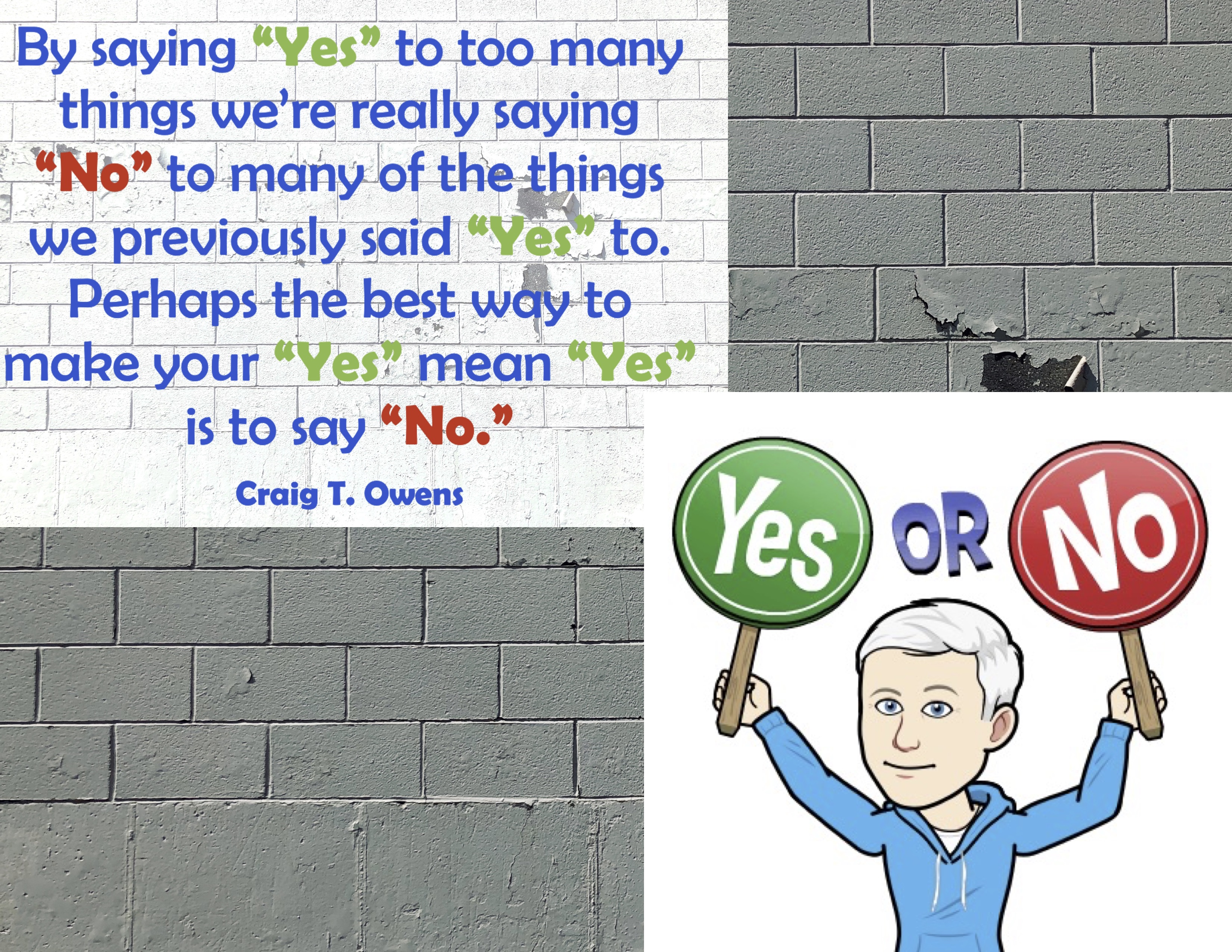
We all like “Yes.” That’s a nice word. But here’s the problem: By saying “Yes” to too many things we’re really saying “No” to many of the things we previously said “Yes” to.

Confused?

Let me try it this way. We all have only 24 hours in a day. No more; no less. We can all do a finite number of things during that 24-hour period. Some may be able to do slightly more, but even the most efficient people have a limit.

When we keep saying “Yes” over and over and over again, eventually our mouths are saying “Yes” but we cannot deliver. We’re out of time, out of resources, out of open places on our To Do list, out of patience, out of energy, out of money.

Perhaps the best way to make your “Yes” mean “Yes” is to say “No.” To truly evaluate what is important, how much time you have, or how much money you have. And then say “No” to the things that you cannot truly commit to.

It’s hard to say “No.” But saying “No” more often will make your “Yes” so much more doable. Otherwise, your verbal “Yes” becomes an “I’ll try,” which eventually is a “Not really,” which in reality is a “No” anyway. So just say “No” upfront.

     And don’t say anything you don’t mean. This counsel is embedded deep in our traditions. You only make things worse when you lay down a smoke screen of pious talk, saying, “I’ll pray for you,” and never doing it, or saying, “God be with you,” and not meaning it. You don’t make your words true by embellishing them with religious lace. In making your speech sound more religious, it becomes less true. Just say “yes” and “no.” When you manipulate words to get your own way, you go wrong. —Jesus (Matthew 5:33-37 in The Message paraphrase)

You can make your “Yes” so much more powerful by only saying “Yes” to those things that are truly important. That means you will need to get comfortable with saying a loving, but firm “No” more often than you probably have in the past.

How many different ways can you say it?

  • No
  • Nyet
  • Nein
  • Nee
  • Jo
  • He
  • Non
  • Δεν
  • לא
  • Nei
  • いいえ
  • Không
  • קיין

You may also want to check out a related post called Undecided Or Uncommitted?

►► Would you please prayerfully consider supporting this ministry? My Patreon supporters get behind-the-scenes access to exclusive materials. ◀︎◀︎
Mad Church Disease (book review)

Read this book and save your life.

Seriously.

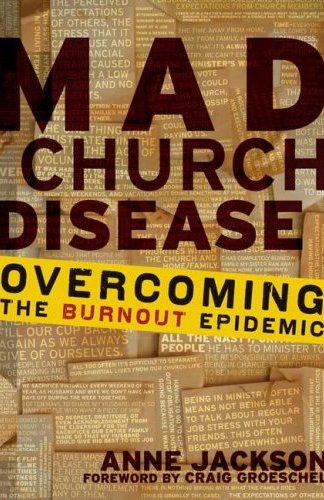
I have seen far too many good people get burned-out in the most unlikely place. The one place where you would expect wholeness and vitality and safety and health: Church! In Mad Church Disease Anne Jackson draws the comparison to bovine spongiform encephalopathy (better known as mad cow disease) to confront mad church disease head-on.

Here’s the insidious thing about the way mad cow disease spreads: after infected cows die, they are ground up and fed to healthy cows. So unwittingly the disease is perpetuated because no one recognizes it’s there. Sadly that’s what happens far too often in the church. We have developed cultures that continue to burn-out people, and then we let those burned-out people feed (develop) new people

Anne shines the light of truth on this ugly disease. She confronts the symptoms head-on, and offers practical steps for helping people get healthy.

As someone who came very close to getting burned-out by mad church disease, I can attest how right-on-the-mark Anne’s book is. And to bolster her diagnosis, Anne interviews several leading pastors whose “second opinion” confirm the original diagnosis. I liked this observation from Bill Hybels:

“Especially as leaders in the church, we consistently need to be filled up and buoyed in our spirits because everybody takes their cue from the leader. If the leader is exhausted, then the people following that leader will feel exhausted. If the leader is wearing thin on hope, then people start losing hope too. If the leader gets pessimistic, everybody gets pessimistic.”

So who should read Mad Church Disease?

  • Pastors
  • Paid church staff
  • Volunteer church ministers
  • Counselors
  • Church board members

Whether you have been infected by mad church disease or not, you need to read this book. It will either be a source of healing for you, or an eye-opener to help protect yourself and others around you from this deadly disease.

The first step to eliminating mad church disease is recognizing its symptoms. Mad Church Disease does just that, and then goes further to talk about the steps for healing. Thanks, Anne, for a straightforward look at this serious disease.

Some Pain For Greater Gain

My US Marine Corps buddy always tells me to suck it up when I complain about something hurting. He says, “Pain is just weakness leaving your body.” Hoo-Rah!

Great.

But for the most part, I don’t like pain. What about you? Most of us non-Marine-types do our best to avoid pain. And if any pain does make it through, we can take care of that really fast with some Motrin or Tylenol, or Icy Hot or a massage session.

However, there are times that some pain is good for greater gain.

What about the temporary pain from an immunization injection? Short-term pain for the long-term gain of being free of disease.

What about a low-grade fever (below 101 degrees)? Taking Tylenol too soon can preempt the natural way your body is raising the heat to kill off an infection. The short-term pain of a fever for the long-term gain of dead germs.

What about the soreness from exercising? Again, the pain is short-term; the benefits of healthy exercise are long-term.

How about saying “no” to temptation? Shouldn’t you trade the short-term pain of temptation for the long-term gain of holiness?

Or God’s discipline? He sometimes puts us in positions that are painful because He is trying to bring the best out of us. Here my Marine buddy is correct: this pain is weakness leaving our (spiritual) body.

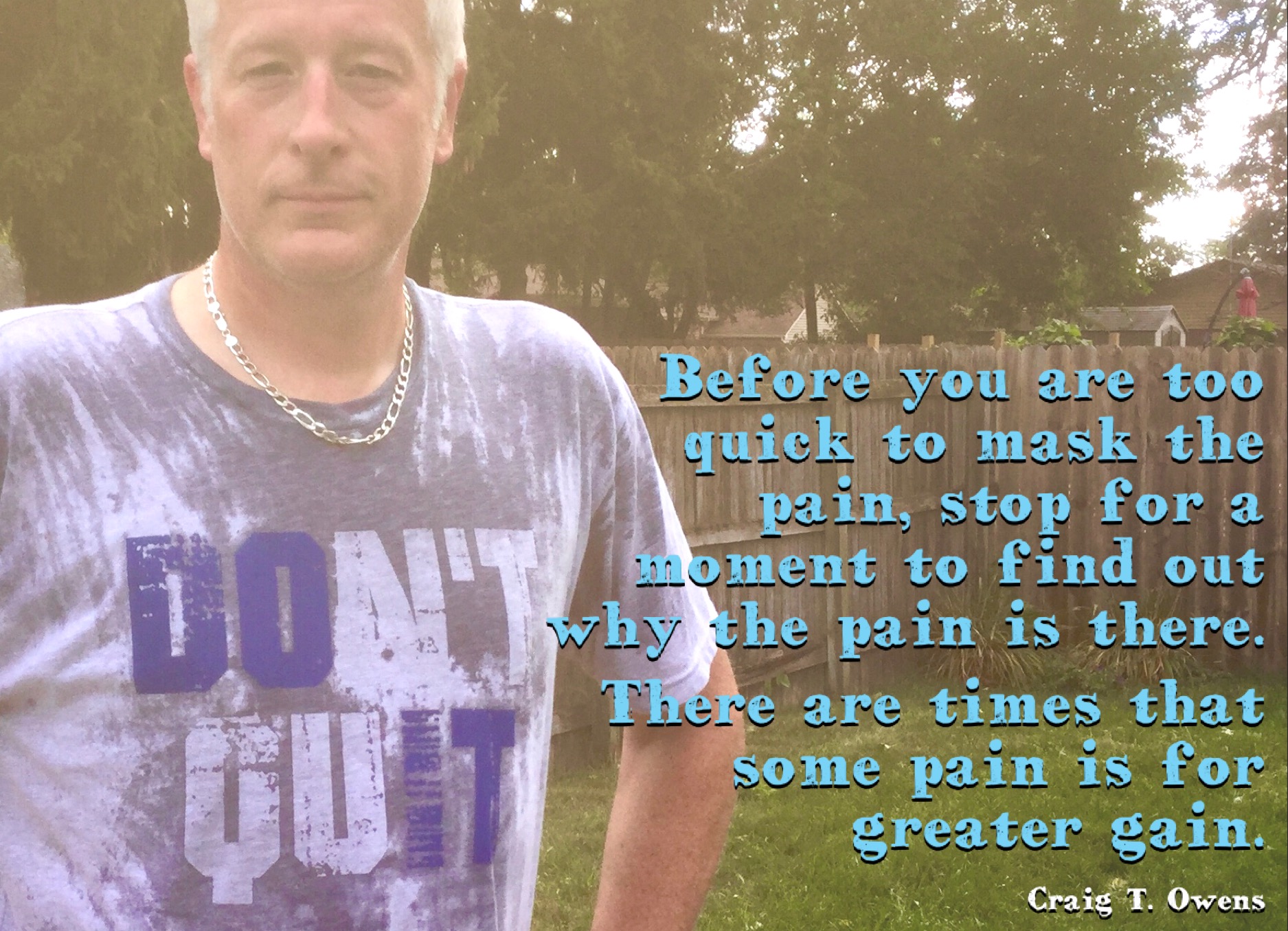
Before you are too quick to mask the pain, stop for a moment to find out why the pain is there. An immunization or low-grade fever or exercise or discipline may be just the short-term pain you need for far greater gain.