A Slight Case Of The “Ites”

As the Israelites were attempting to settle in the Promised Land, there is a repeated phrase, “They could not drive out the ites.” (The “ites” are people like Canaanites, Hivites, Jebusites, etc.) God told them that they should completely clear the land of the ites, but they didn’t. Instead, they just subjected them to forced labor.

Oops! These small ites eventually became the downfall of Israel. The ites continued to practice their pagan worship observances, and eventually enticed the people of Israel to join them. As a result, Israel was humiliated, defeated, and carried off into captivity.

Can I make a parallel to our lives?

The Promised Land is a Christ-follower’s life in Christ. The ites are our sinful tendencies.

I know the ites are there, but it seems so difficult to remove them: the Bible uses the phrase they were determined to live in that land. So the ites are allowed to coexist, and I determine to use my willpower to make sure they stay contained.

After awhile the ites have behaved themselves. They seem harmless enough. In fact, I’ve gotten so strong, so mature, in my Christian faith, I know I’ll never give in to the pull of the ites again. I can relax a little bit now.

But the ites wait. They bide their time. They find just a crack to slowly worm their way in. Then when I am at a vulnerable time, they strike. The slave becomes the master. The ites retake possession of my life.

Willpower will not work. Only complete elimination will work.

God will help you if you will let Him.

  • What ites are you trying to hold down by sheer willpower?
  • What ites do you tolerate now that you didn’t tolerate earlier in your faith walk?
  • Do you think you are immune to some ites now that you are more mature?

The Bible’s warning is loud and clear:

These are all warning markers—danger!—in our history books, written down so that we don’t repeat their mistakes. Our positions in the story are parallel—they at the beginning, we at the end—and we are just as capable of messing it up as they were. Don’t be so naive and self-confident. You’re not exempt. You could fall flat on your face as easily as anyone else. Forget about [willpower]; it’s useless. Cultivate [God-power].

A slight case of the ites is a serious thing! Don’t let it continue!

Defeating Depression

In 1 Kings 19, Elijah hears that Queen Jezebel wants to kill him, so he “ran for his life.” Just four verses earlier Elijah “ran in the power of the Lord” (18:46) but now he is running scared. After 42 days of despondent wandering, Elijah ends up in a cave and God asks Elijah, “Why are you here?” (v. 9).

Elijah’s answer seems unresponsive. He tells God—as though He didn’t already know!—all about the spiritual conditions in Israel, but he never really answers the “why” question. God reveals Himself to Elijah more intimately (as “a gentle whisper”) and asks him again, “Why are you here?” Elijah gives the same, word-for-word answer.

During difficult times—when my “enemies” seem too numerous to count or too big to defeat—the eyes of my soul become cloudy. It becomes harder to look out and so I naturally tend to look inward. As a result, I become the center of my entire universe: “Now they are trying to kill me!”

In Psalms 42 and 43, the psalmist is clearly depressed. Look at his inward, me-focused questions—

  • When can I go and meet with God? (42:2)
  • My enemies continually taunt me, saying, “Where is this God of yours?” (42:3)
  • Why are you so downcast, O my soul? Why so disturbed within me? (42:5, 11; 43:5)
  • Why have You forgotten me? (42:9)
  • Why have You rejected me? (43:2)

Just as God’s question to Elijah was supposed to get him to look outward, the psalmist does begin to turn his gaze from himself. But notice how he does it—

  • My soul is downcast within me; therefore I will remember You (42:6)
  • Put your hope in God, for I will yet praise Him, my Savior and my God (42:11; 43:5)

When I’m battling depression, it takes an act of my will to praise God, to look outward and upward. Feelings follow actions. I don’t feel like praising Him because my problems feel so overwhelming, but when I will to praise Him, the feelings will follow.

Look how David did it—

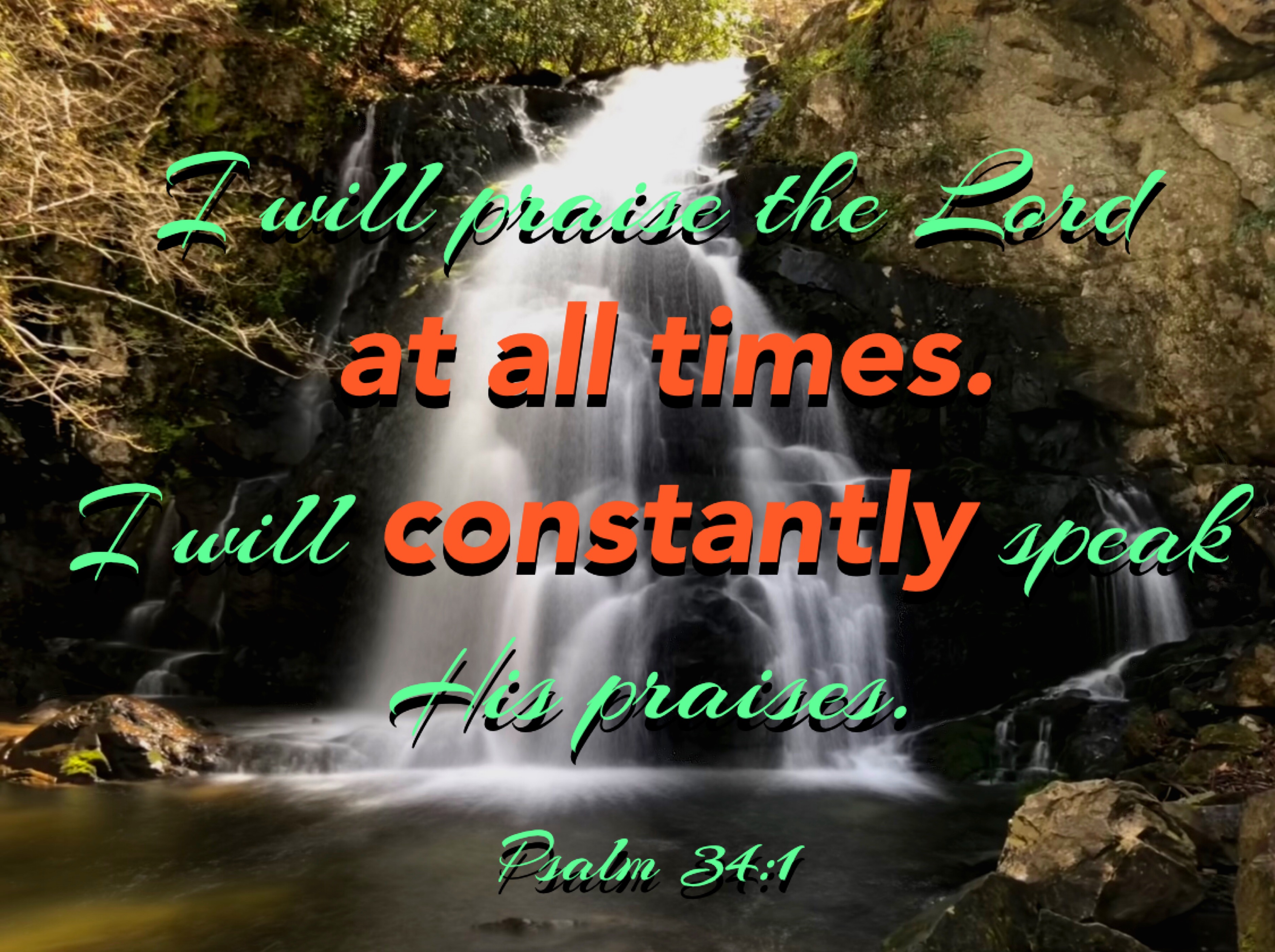
I will extol the LORD at all times; His praise will always be on my lips.
My soul will boast in the LORD; let the afflicted hear and rejoice.
Glorify the LORD with me; let us exalt His name together.
(Psalm 34:1-3)

My friend, if you are depressed—if you have become inward-focused—only an act of your will can lift you out of this funk.

Use your willpower to act—look out, look up, praise God—and the cloud over your soul will begin to lift!

Piling On!

It just wasn’t going very well for David!

His boss, Saul, was jealous of him and was trying to kill him.
He had to leave his best friend behind when he ran for his life.
And his wife.
And his Mom & Dad.
And his brothers.
And his pastor.
Then his best friend is almost killed for standing up for David.

So David runs to enemy territory. After all “the enemy of my enemy is my friend,” right?

Um, not so much! The king of Gath was Saul’s enemy, but he wasn’t too fond of David either. How does David get out of this one? He starts drooling like an idiot, clawing weird symbols on the wooden doors and acting like a madman!

David runs away from Gath to Adullam Cave, which then quickly becomes the gathering spot for every distressed, bankrupt malcontent in the country. Some following David had!

Have you ever had one of those days? You know, where nothing is going right, and everywhere you turn is simply more trouble—out of the frying pan and into the fire! The problems just seem to keep piling on!

Yet there in Adullam Cave, David pens some of the most profound words. Read them carefully, and note the progression:

I will extol the LORD at all times; His praise will always be on my lips.
My soul will boast in the LORD; let the afflicted hear and rejoice.
Glorify the LORD with me; let us exalt His name together.
(Psalm 34:1-3)

Notice how David chooses to praise God as an act of his will—I will extol the Lord… I will praise Him with my lips.

And then this act of his will gets into his soul (his emotions), and as a result, the other distressed, bankrupt malcontents begin to see something different in David. He doesn’t break down when the problems pile on; he praises God!

And then these malcontents begin to glorify the Lord with David; they begin to exalt His name together.

Friends, how you choose to respond when the problems pile on is vital. Yes, misery loves company. If you are feeling miserable, other miserable people will flock to you. Don’t use this group to have a pity party, but see it as an incredible opportunity to use your will to praise God.

Remember, feelings follow actions. You may not feel like praising God because the problems are piled on so high, but when you act the feelings will follow. David went from “I will” to “my soul” in just one verse! And the same thing will happen for you too!

A distressed, malcontented world is watching you—what will you do when your problems pile on?