Doing Thinking Doing

To think or to act? That is the question. Or maybe the question should be, which comes first: the thinking or the acting? Do I think about something and then go do it? Or do I do something first and then think about what I’ve done and how I could do it better next time?

The answer, I believe, is yes.

You could be the most creative thinker in the world, your thoughts could be off on another plane, but if you do nothing with what you’re thinking, all of those great insights are wasted.

On the other hand, many people hold to the axiom that experience is the best teacher, so they just do and do and do. But experience is not the teacher; we only learn when we stop to think about what we’ve done.

William Wilberforce was already a rising star in British politics when he experienced a deeper understanding of his relationship to God. Suddenly this man of word and action wanted to do nothing more than meditate on the greatness of God. Wilberforce believed that he could best serve God by withdrawing from society and simply thinking about God.

His good friend and future prime minister William Pitt disagreed. Pitt wrote to Wilberforce, “Why then this preparation of solitude which can hardly avoid tincturing the mind either with melancholy or superstition? … Surely the principles as well as the practice of Christianity are simple and lead not to meditation but to action.” Or as the line from Amazing Grace has it, “We humbly suggest you can do both.”

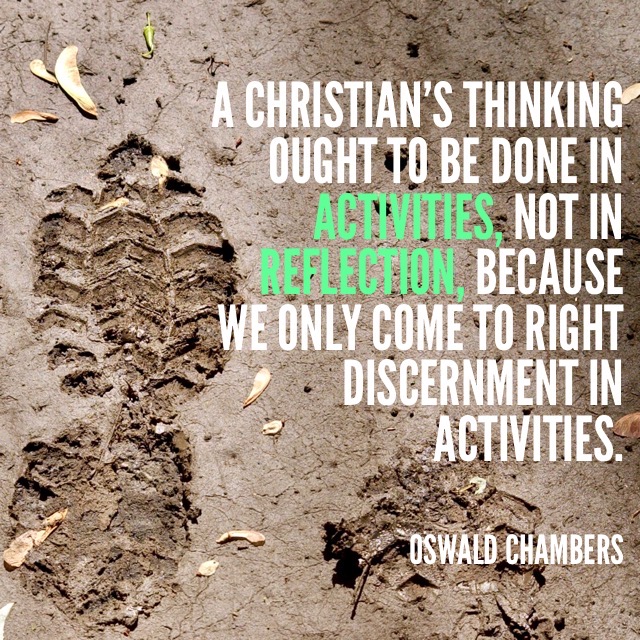
I love Oswald Chambers’ counsel—

“God will never allow us to divide our lives into sacred and secular, into study and activity. We generally think of a student as one who shuts himself up and studies in a reflective way, but that is never revealed in God’s book. A Christian’s thinking ought to be done in activities, not in reflection, because we only come to right discernment in activities.”

Whether it starts with thinking or starts with action, successful thinking-doing must include both. Think about it → act on it → think about your results → do it again better than last time.

Paul wrote to the Romans how thinking and action work together when he said, “for their own conscience and thoughts either accuse them or tell them they are doing right” (Romans 2:5 NLT). The Amplified Bible renders this phrase, “their consciences (sense of right and wrong) also bear witness; and their decisions (their arguments of reason, their condemning or approving thoughts) will accuse or perhaps defend and excuse them.”

Think about it → do it → think about it → do it = the pattern for success.

Success Is Going

King David is one of the most well-known characters in the Old Testament. Such incredible stories are told about him that his life can be summed up in one phrase that occurs four times in Scripture—The Lord gave David victory everywhere he went (2 Samuel 8:6, 14; 1 Chronicles 18:6, 13).

When David was faced with a challenge or an enemy, he threw himself fully into meeting the enemy head-on, and he was always successful. There is no record of David ever being defeated in battle. If he went out, he won.

Aha, keyword alert—The Lord gave David victory everywhere he WENT.

The only times David was defeated was when he stood still:

• When his son Absalom killed another of David’s sons, Amnon, David didn’t do anything. Even when Absalom returned from exile, David stayed home and didn’t reconcile with his son (2 Samuel 13-15).

• David’s son Adonijah behaved inappropriately and eventually rebelled against David, too. But David “never interfered with him by asking, ‘Why do you behave as you do?’” (1 Kings 1:6).

• David lusted after and then committed adultery with Bathsheba when, “In the spring, at the time when kings go off to war, Joab led out the armed forces. … But David remained in Jerusalem” (1 Chronicles 20:1).

• David angered God by ordering that a census be taken of all of the men eligible for military service in Israel. “So David said to Joab and the commanders of the troops, ‘Go and count…” (1 Chronicles 21:2). In other words, David stayed while others went.

Solomon correctly noted, “The path of life leads upward for the wise to keep him from going down to the grave” (Proverbs 15:24). There are only two directions: forward (or up) OR backward (or down). There is no standing still.

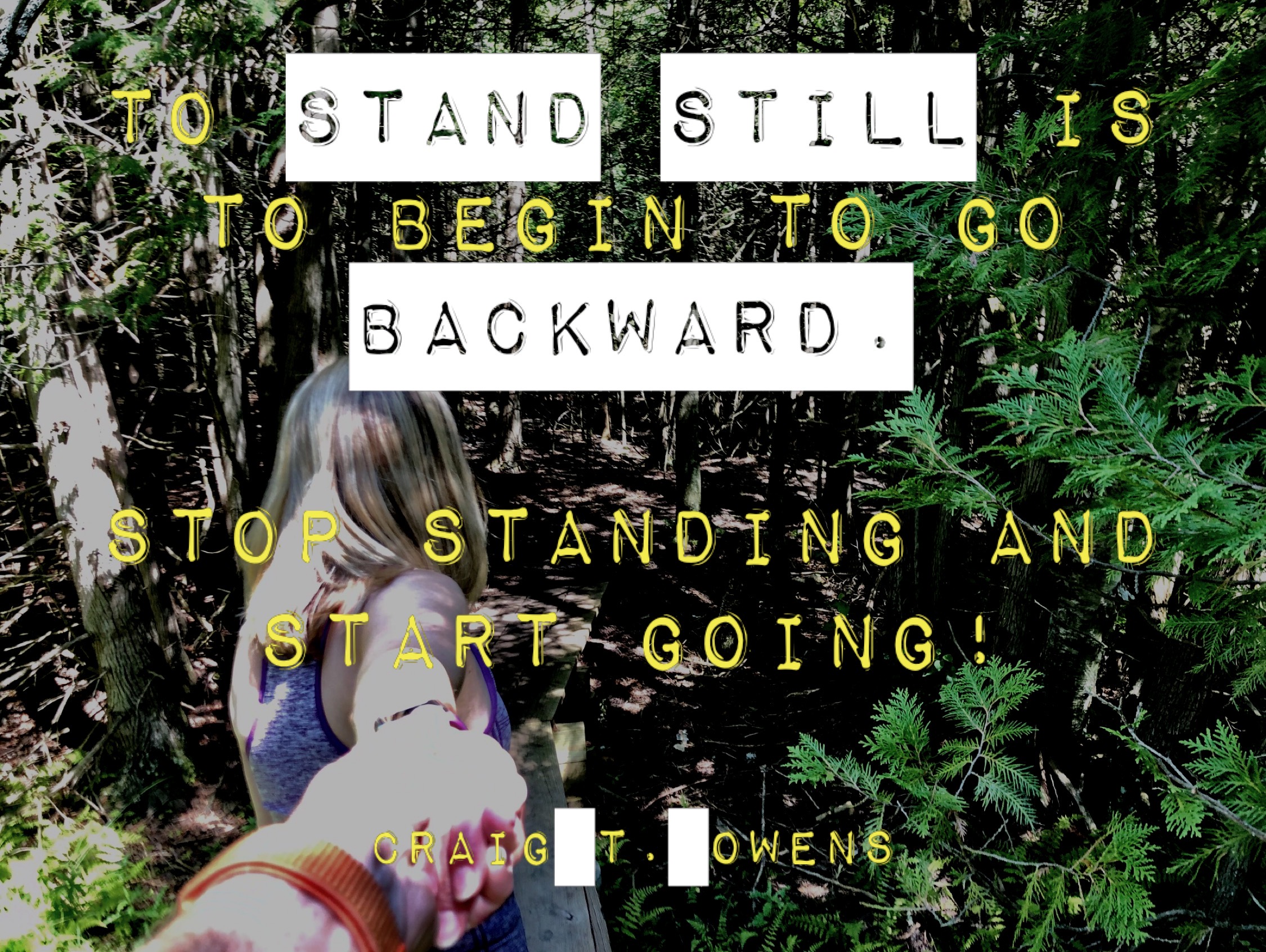
The Lord gave David victory everywhere he WENT, not everywhere he stood still. To stand still is to begin to go backward.

Is there a battle you need to fight? Is there a challenge you’ve been avoiding? Is there something you need to complete? Are you waiting for something to happen? Are you content just to stand still?

Stop standing still and start going! If you are following God, He will give you victory everywhere you go.