5 Quotes From Albert Einstein In “There Is A God”

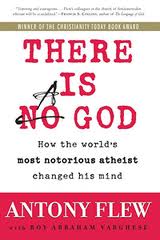
There Is A GodAs I said in my book review of Anthony Flew’s There Is A God, the real value of this book is in the arguments which contributed to Flew’s shift from atheism to theism. You can read my full book review by clicking here.

Frankly, it’s hard to share a lot of the quotes because the context of the full argument would be lacking, but I’ve begun sharing some of them over several posts. To continue, below are some quotes from Albert Einstein.

“I am not a positivist. Positivism states that what cannot be observed does not exist. This conception is scientifically indefensible, for it is impossible to make valid affirmations of what people ‘can’ or ‘cannot’ observe. One would have to say ‘only what we observe exists,’ which is obviously false.” —Albert Einstein

“The man of science is a poor philosopher.” —Albert Einstein

“I want to know how God created this world. … I want to know His thoughts, the rest are details.” —Albert Einstein

“I’m not an atheist, and I don’t think I can call myself a pantheist. We are in the position of a little child entering a huge library filled with books in many languages. The child knows someone must have written those books. It does not know how. It does not understand the languages in which they are written. The child dimly suspects a mysterious order in the arrangement of the books but doesn’t know what it is. That, it seems to me, is the attitude of even the most intelligent human being toward God. We see the universe marvelously arranged and obeying certain laws but only dimly understand these laws. Our limited minds grasp the mysterious force that moves the constellations.” —Albert Einstein

“Every one who is seriously engaged in the pursuit of science becomes convinced the laws of nature manifest the existence of a spirit vastly superior to that of men, and one in the face of which we with our modest powers must feel humble.” —Albert Einstein

More quotes are forthcoming. You can read some direct quotes from Anthony Flew by clicking here.

Correcting The Pantheist

C.S. Lewis at his deskI recently re-read C.S. Lewis’ book Miracles (you can read my full book review by clicking here). As you may have noticed, after reading and reviewing books on this blog, I also like to share some quotes that caught my attention. Doing this with Lewis is difficult, because in order to get the context of a particular quote, I think I would have to cite almost a full page or more. So over the next few weeks I plan to share some quotes from Miracles that require not as much context, or I will provide a bit of background to set the stage.

Democritus was a Greek philosopher who proposed the universe was made up of invisible atoms and empty space. The atoms perpetually bounced around and sometimes connected with other atoms to form our tangible universe. Erwin Schrödinger put a ‘concreteness’ or ‘definiteness’ to the atomic theories previous held. In other words, Democritus saw an almost pantheistic, indescribable vagueness about Nature, whereas Schrödinger gave it definition. Lewis says that Christians need to put Monotheistic definitions on Nature and Supernature. 

“At every point Christianity has to correct the natural expectations of the Pantheist and offer something more difficult, just as Schrödinger has to correct Democritus. At every moment he has to multiply distinctions and rule out false analogies. He has to substitute the mappings of something that has a positive, concrete, and highly articulated character for the formless generalities in which Pantheism is at home.” 

 “If God is the ultimate source of all concrete, individual things and events, then God Himself must be concrete, and individual in the highest degree. Unless the origin of all other things were itself concrete and individual, nothing else could be so; for there is no conceivable means whereby what is abstract or general could itself produce concrete reality. Bookkeeping, continued to all eternity, could never produce one farthing. Metre, of itself, could never produce a poem. Bookkeeping needs something else (namely, real money put into the account) and metre needs something else (real words, fed into it by a poet) before any income or any poem can exist. If anything is to exist at all, then the Original Thing must be, not a principal nor a generality, much less an ‘ideal’ or a ‘value,’ but an utterly concrete fact.”

For more quotes from this book, check out Miracle Or “Cheating”? and Miracles And Nature.

Christianity & Pantheism

C.S. Lewis at his deskI recently re-read C.S. Lewis′ book Miracles (you can read my full book review by clicking here). As you may have noticed, after reading and reviewing books on this blog, I also like to share some quotes that caught my attention. Doing this with Lewis is difficult because in order to get the context of a particular quote, I think I would have to cite almost a full page or more. So over the next few weeks, I plan to share some quotes from Miracles that require not as much context, or I will provide a bit of background to set the stage.

In this passage, Lewis refers to Flatlanders. This is a reference to a fascinating book called Flatland by Edwin Abbott, in which a 3-dimensional Sphere visits the 2-dimensional world called Flatland and speaks with Square. It was a favorite book of not only Lewis but Albert Einstein as well.

“The popular ‘religion’ excludes miracles because it excludes the ‘living God’ of Christianity and believes instead in a kind of God who obviously would not do miracles, or indeed anything else. … If ‘religion’ means simply what man says about God, and not what God does about man, then Pantheism almost is religion. … The old atomic theory is in physics what Pantheism is in religion—the normal, instinctive guess of the human mind, not utterly wrong, but needing correction. Christian theology and quantum physics are both, by comparison with the first guess, hard, complex, dry and repellent. … The Pantheist and Christian agree that we are all dependent on God and intimately related to Him. But the Christian defines this relation in terms of Maker and made, whereas the Pantheist (at least of the popular kind) says, we are ‘parts’ of Him, or are contained in Him. … Pantheist and Christian also agree that God is super-personal. The Christian means by this that God has a positive structure which we could never have guessed in advance, any more than a knowledge of squares would have enabled us to guess at a cube. He contains ‘persons’ (three of them) while remaining one God, as a cube contains six squares while remaining one solid body. We cannot comprehend such a structure any more than the Flatlanders could comprehend a cube. But we can at least comprehend our incomprehension, and see that if there is something beyond personality it ought to be incomprehensible in that sort of way. The Pantheist, on the other hand, though he may say super-personal really conceives God in terms of what is sub-personal—as though the Flatlanders thought a cube existed in fewer dimensions then a square.”

For other quotes from this book, see Miracles Or “Cheating”? and Miracle And Nature.