

Social Justice

Scales of social justiceThere is a lot of talk about “social justice”—speaking out and acting on behalf of those who are oppressed, marginalized and disenfranchised. This is close to God’s heart, too, as He describes “pure religion” in terms of caring for orphans and looking after widows (see James 1:27).

But we hinder our attempts at social justice if it’s not tied to God’s righteousness. Because without righteousness, we don’t have God’s unlimited help and are simply operating under our own limited power.

Surely the arm of the Lord is not too short to save, nor His ear too dull to hear. But your iniquities have separated you from your God; your sins have hidden His face from you, so that He will not hear. (Isaiah 59:1-2, emphasis added)

Justice is mentioned four times in this 59th chapter of Isaiah, but always in close proximity to righteousness

The opening verse is the perfect conclusion: God has the ability to help us (justice), but our lack of righteousness prevents Him from hearing our pleas and moving to action.

The single-best way to make social justice maximally effective is for each of us to pursue God’s righteousness. 

All efforts at social justice apart from God’s help will bring small, temporary gains at best. But even our smallest attempts at social justice with God’s help will bring lasting results for the greatest number of people.
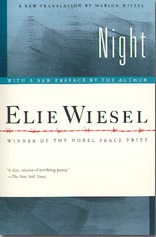
Night (book review)

Night by Elie Wiesel is not an easy read. But it is a vital read. In order to ensure that the evil perpetrated on the Jewish people by the Nazi regime never, ever happens to any other people group again, we must read what is not easy for us to read.

This book is the heart-wrenching account of the atrocities committed by the Nazis during the Holocaust. But it’s not simply a factual retelling of these horrendous events. Night takes you right into the utter despair felt by people who were completely dehumanized. People who were treated less humanely than animals. People who lived in the midst of pure Evil.

Elie Wiesel tells his firsthand account as a teenage boy forcibly removed from his home, separated from his mother and sisters, stripped of his dignity, treated in despicable ways, struggled with his anger toward God, and watched his father die right before his eyes. No one should have had to endure such things.

Elie Wiesel survived to tell his story, so that he could become the voice for the voiceless oppressed. What a great lesson for all of us to learn! We, too, should speak up for those who cannot. As Elie said in his Nobel Peace Prize acceptance speech:

We must take sides. Neutrality helps the oppressor, never the victim. Silence encourages the tormentor, never the tormented. Sometimes we must interfere. … Human suffering anywhere concerns men and women everywhere. … And action is the only remedy to indifference, the most insidious danger of all. … One person of integrity can make a difference, a difference of life and death.

Please read this book, and then be one person of integrity who makes a difference.

White As Snow

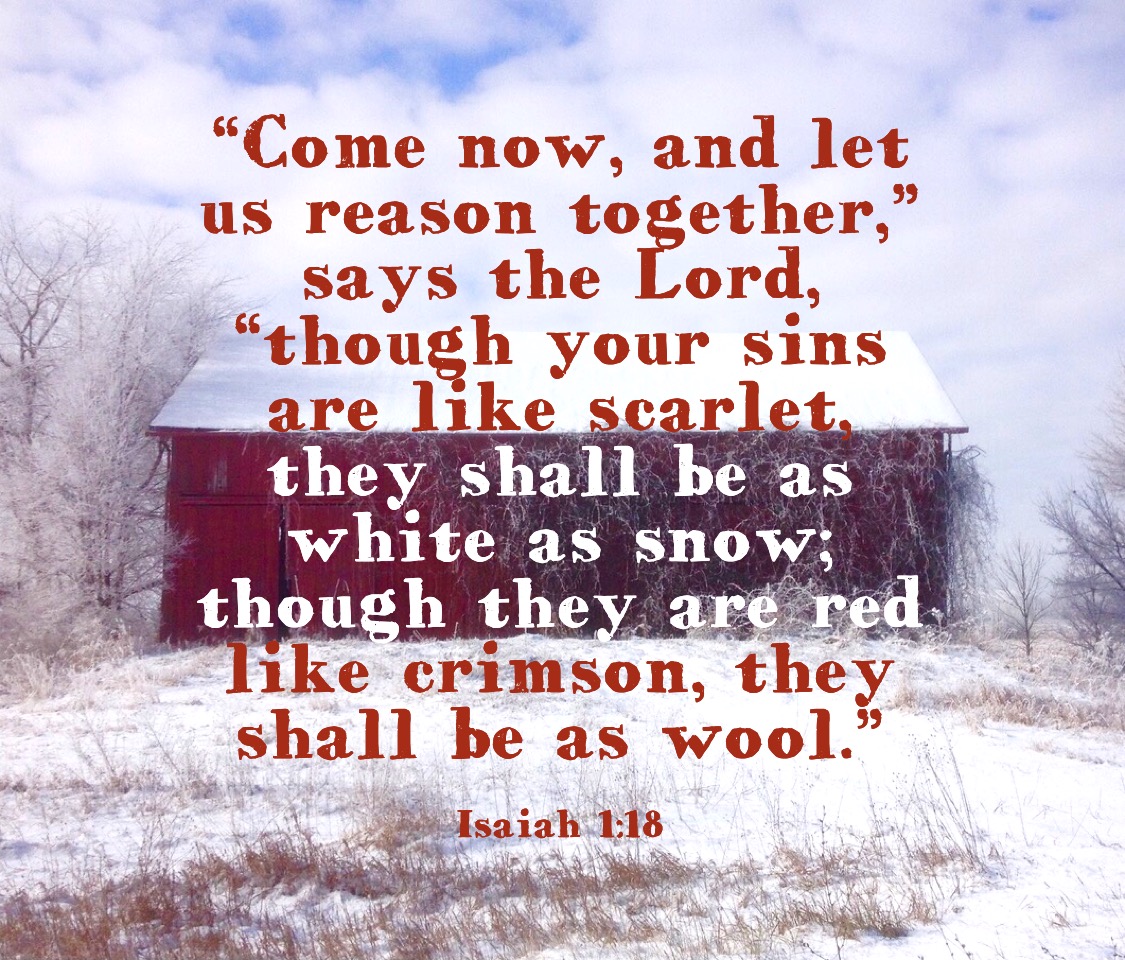
As I watch the snow falling outside today, slowly covering everything in a pure, unblemished whiteness, the same thought enters my mind every year at the first snowfall. God says,

Learn to do good. Seek justice. Help the oppressed. Defend the cause of orphans. Fight for the rights of widows. “Come now, let’s settle this,” says the Lord. “Though your sins are like scarlet, I will make them as white as snow. Though they are red like crimson, I will make them as white as wool.”

And this line from the great old hymn,

My sin, O the bliss of this glorious thought, my sin, not in part, but the whole, is nailed to the Cross and I bear it no more. Praise the Lord, praise the Lord, O my soul!

Doing good, seeking justice, helping the oppressed, defending orphans, and fighting for widows doesn’t cleanse my crimson sin, but when my sin has been covered I DESIRE TO do these things!

What do you think of the snow?

What do you think of God’s incredible whiteness applied to your life?