


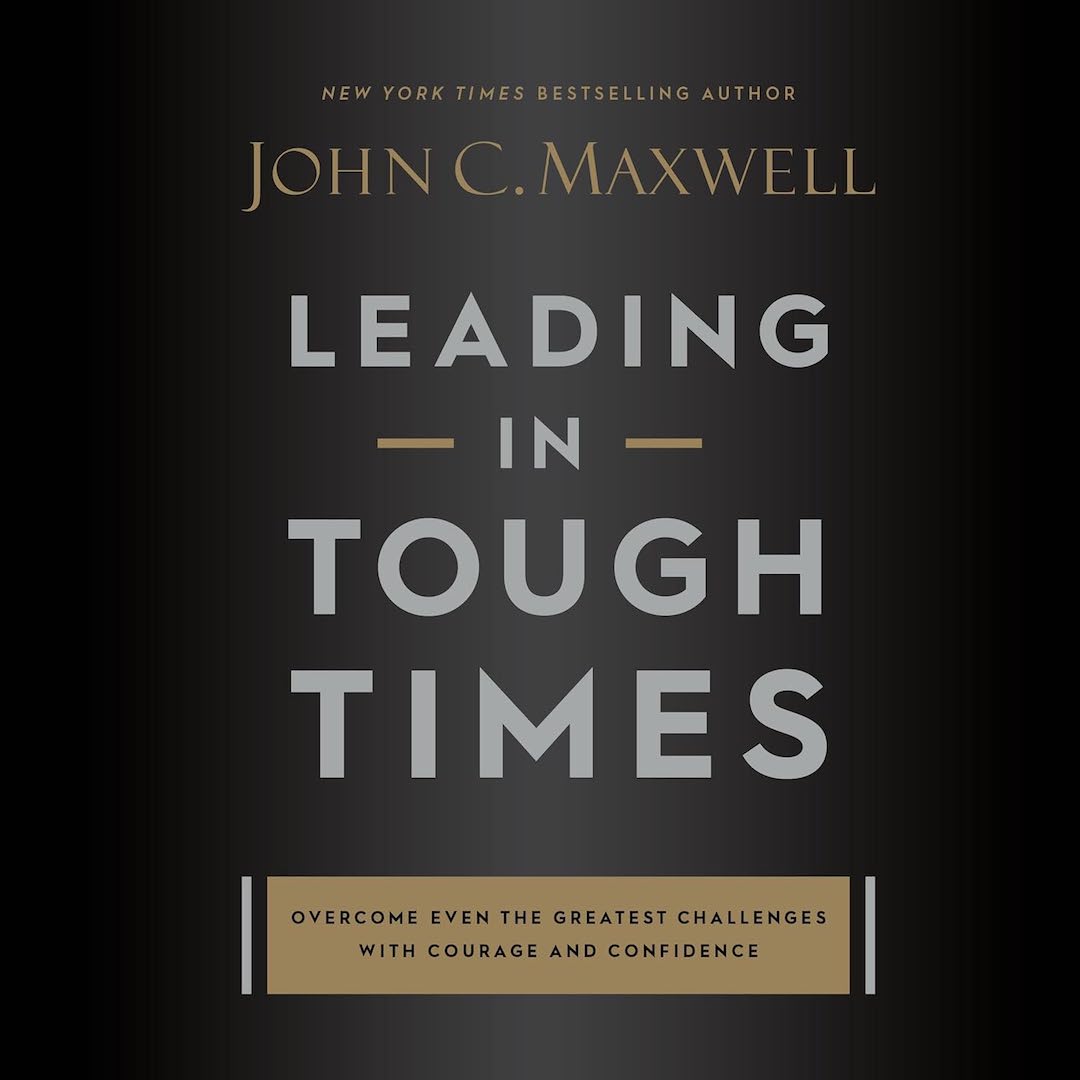
 Everyone faces tough times, but leaders who encounter these difficult times have the opportunity to help their teams thrive or fall during this time. John Maxwell shares the challenges leader face in these situations, and how they can overcome them and help successfully bring others along as well. Check out my full book review of Leading in Tough Times.
“Good leaders understand that adversity and challenges are actually opportunities to rise up in leadership.
- Adversity introduces us to ourselves
- Adversity is a better teacher than success
- Adversity opens doors for new opportunities
- Adversity writes our story if our response is right”
“How do people overcome problems, challenges, and difficulties? They make changes. Improvement requires change. Innovation requires change. Seizing opportunities requires change. … As a leader in tough times, you need to become a change agent. You need to help others embrace positive change, even when it takes them outside their comfort zone. You need to help them get results, even when they worry that it might not be possible.”
“There is no downside to adding value to people. Yes, it will cost you time and effort. But when you add value to people, you help them and make them more valuable.”
“If you lead people who are falling short of their potential, you need to start asking why. Have you put them in their strength zones? Are you providing the training and resources they need to be successful? Is there something they need that you’re not giving? You always need to make sure you are not the problem before you look to see where the problem is.”
“If you are a leader, the true measure of your success is not getting people to work. It’s not getting people to work hard. It is getting people to work hard together.”
“In times of difficulty, relationships are a shelter. In terms of opportunity, they are a launching pad. Trust is required for people to feel safe enough to create, share, question, attempt, and risk. Without it, leadership is weak and teamwork is impossible.”
“One of the best ways to persuade others is with your ears. That may seem counterintuitive, because we expect persuasion to involve speaking. But when a leader listens to members of the team, that act gives the leader greater credibility and therefore influence. In contrast, when team members no longer believe that their leader listens to understand them, they start looking around for someone who will.”
“Care and candor must be in balance. Care without candor creates dysfunctional relationships. Candor without care creates distant relationships. But care balanced with candor creates developing relationships. … Caring values the person while candor values the person’s potential.”
My Patreon supporters have access to all of the quotes I shared from this book. You can join them to get exclusive content and early access to other content by becoming a supporter today.


 Craig T. Owens
Tell me what you think about this...