


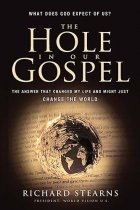
 When I first heard the title of Richard Stearns’ book—The Hole In Our Gospel—a thought crept into my mind. When I read on the back cover the phrase “to walk with the poorest of the poor in our world,” I was convinced: I just knew this book was going to be a guilt trip.
I couldn’t have been more wrong!
“The idea behind The Hole In Our Gospel is quite simple. It’s basically the belief that being a Christian, or follower of Jesus Christ, requires much more than just having a personal and transforming relationship with God. It also entails a public and transforming relationship with the world,” writes Stearns as he introduces his book.
Using his life as a personal example, and presenting a stark but realistic picture of the suffering humanity in the world today, Stearns challenged me to look outside my own paradigm. I’ve seen the infomercials about sponsoring a child, and I keep abreast of the latest calamities in the world, but Stearns presents these sobering facts in a way that made me want to do something. Stearns quoted his friend Gary Gulbranson, “It’s not what you believe that counts; it’s what you believe enough to do.”
The other thing I wrongly assumed from the cover of this book was that the problems facing us were so huge, that even if I got involved little would change. Instead, Stearns showed me practical ways to help.
Far from being a “downer” or a guilt-trip, I found this book to paint an exciting picture of what was possible if I would just get involved. I could begin to imagine a world in which humanity was better off because I was in it.
Don’t shy away from this book just because it’s written by the president of World Vision: you will not read a single “commercial” or appeal to donate to World Vision or sponsor a child. But you will be changed. You will be challenged. On the closing page, Stearns asks a poignant question: “And when you close this book, what will you do now?”
I’m going to get involved.


 Craig T. Owens