There was one daily offering that was necessary every day, then there were other offerings that were additional.
Here’s the principle:
Theadditional should never take the place of the necessary if the additional is crowding out the necessary.
There are some things that are necessary for me every day: my devotional time, my personal prayer life, time with my wife, time with my kids, and a few other necessaries.
There are some things that are additional for me: a church project, a community event, a committee or club. You get the idea.
There is nothing wrong with the additionalUNLESS the additional is crowding out the necessary.
What is necessary for you?What are the additional things you have added?
Always remember: The additional should never take the place of the necessary. If your additional is crowding out your necessary, it’s time to make some changes.
Listen to the podcast of this post by clicking on the player below, and you can also subscribe on Apple, Spotify, or Audible.
We all like “Yes.” That’s a nice word. But here’s the problem: By saying “Yes” to too many things we’re really saying “No” to many of the things we previously said “Yes” to.
Confused?
Let me try it this way. We all have only 24 hours in a day. No more; no less. We can all do a finite number of things during that 24-hour period. Some may be able to do slightly more, but even the most efficient people have a limit.
When we keep saying “Yes” over and over and over again, eventually our mouths are saying “Yes” but we cannot deliver. We’re out of time, out of resources, out of open places on our To Do list, out of patience, out of energy, out of money.
Perhapsthe best way to make your “Yes” mean “Yes” is to say “No.” To truly evaluate what is important, how much time you have, or how much money you have. And then say “No” to the things that you cannot truly commit to.
It’s hard to say “No.” But saying “No” more often will make your “Yes” so much more doable. Otherwise, your verbal “Yes” becomes an “I’ll try,” which eventually is a “Not really,” which in reality is a “No” anyway. So just say “No” upfront.
And don’t say anything you don’t mean. This counsel is embedded deep in our traditions. You only make things worse when you lay down a smoke screen of pious talk, saying, “I’ll pray for you,” and never doing it, or saying, “God be with you,” and not meaning it. You don’t make your words true by embellishing them with religious lace. In making your speech sound more religious, it becomes less true. Just say “yes” and “no.” When you manipulate words to get your own way, you go wrong. —Jesus (Matthew 5:33-37 in The Message paraphrase)
You can make your “Yes” so much more powerful by only saying “Yes” to those things that are truly important. That means you will need to get comfortable with saying a loving, but firm “No” more often than you probably have in the past.



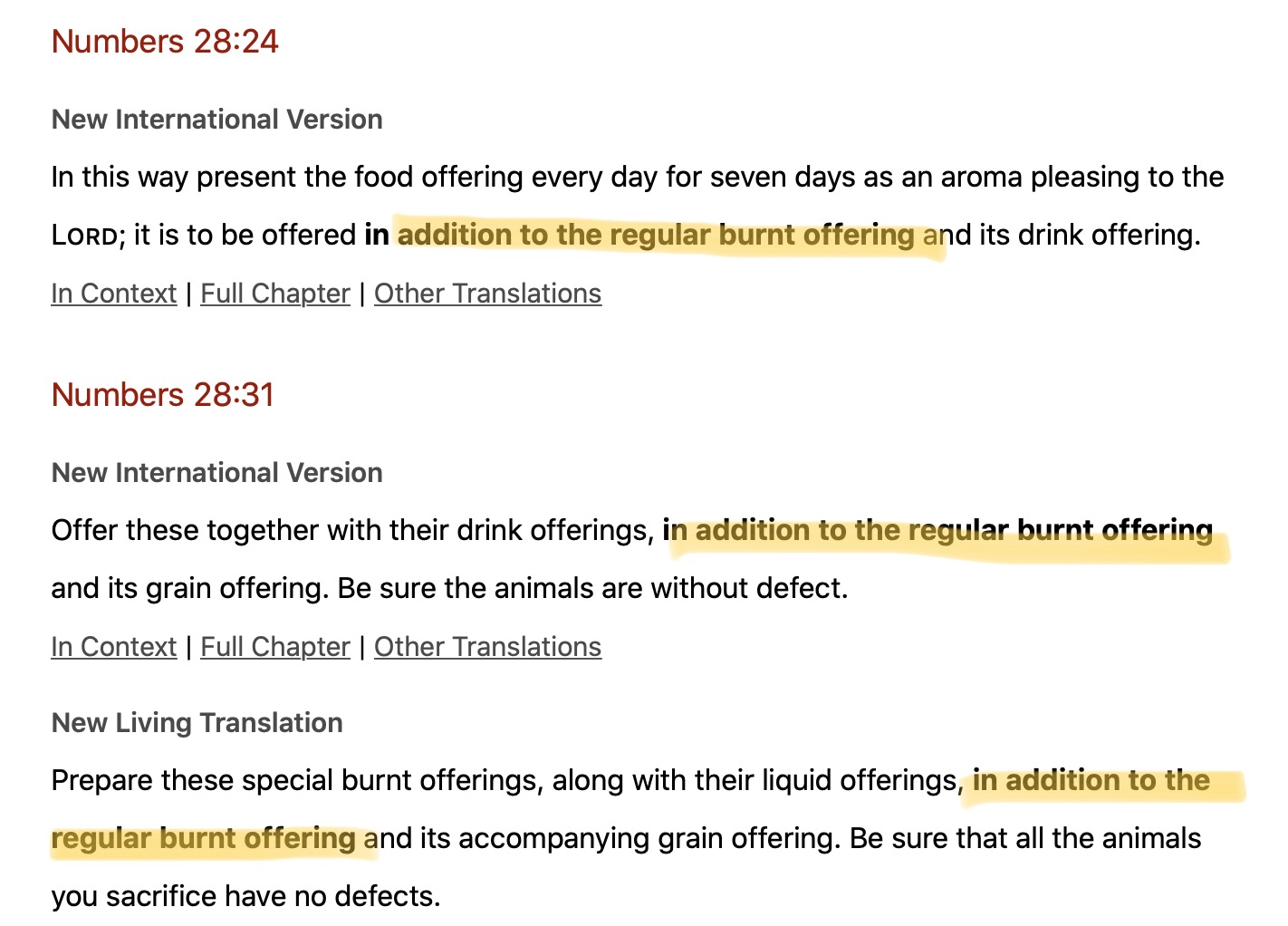 In listing the sacrifices that the Israelites were to bring to the tabernacle, a repeated phrase kept jumping out at me: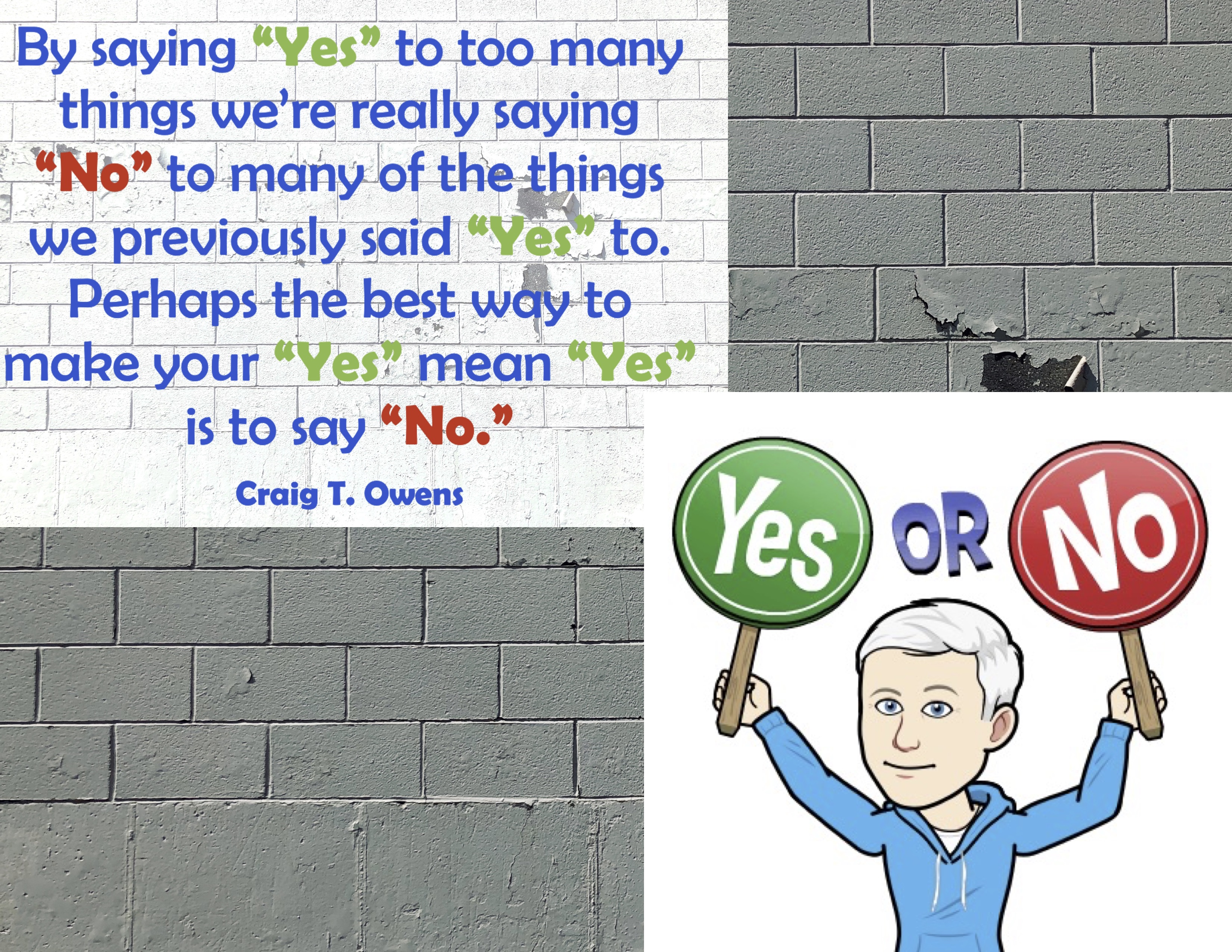


 Craig T. Owens